Back to list
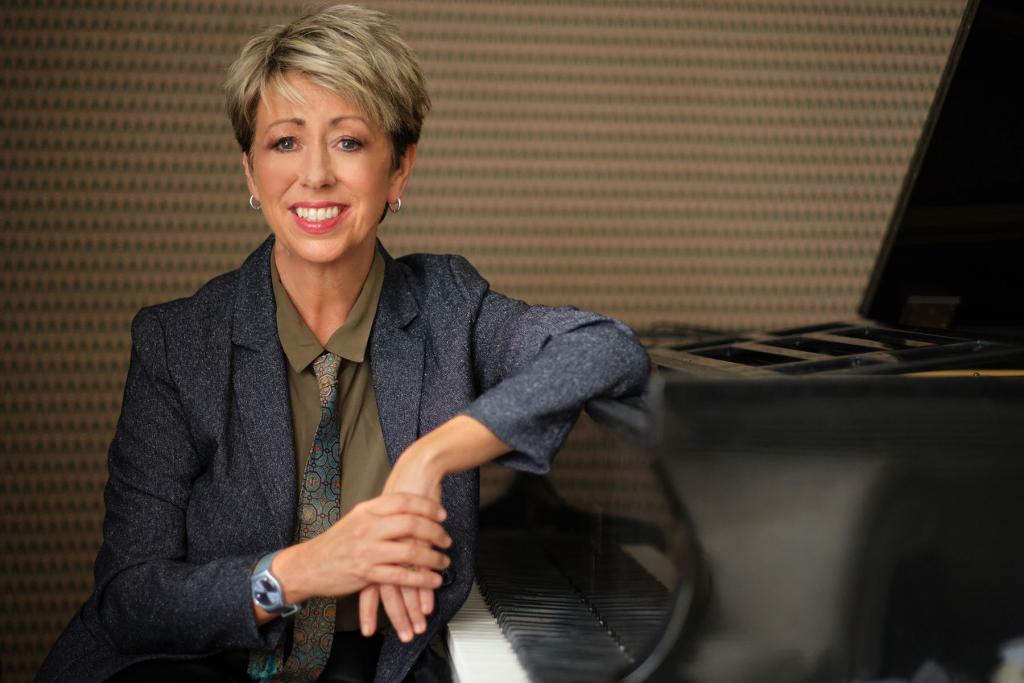
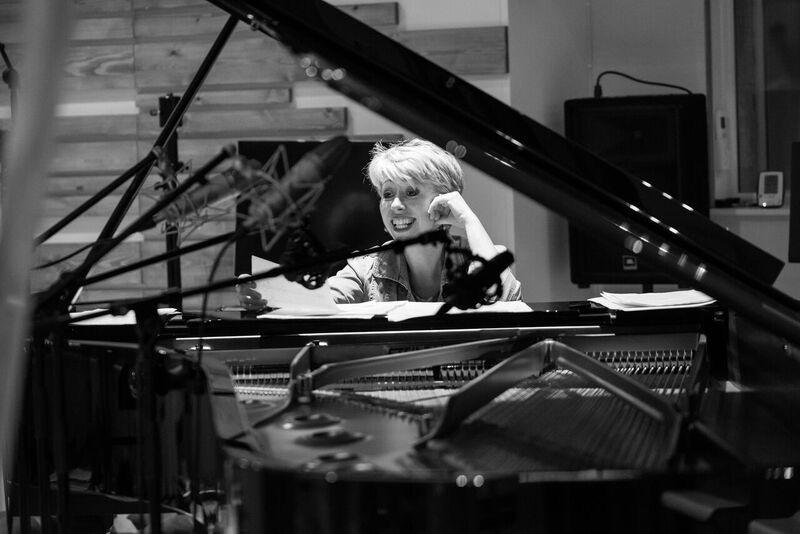
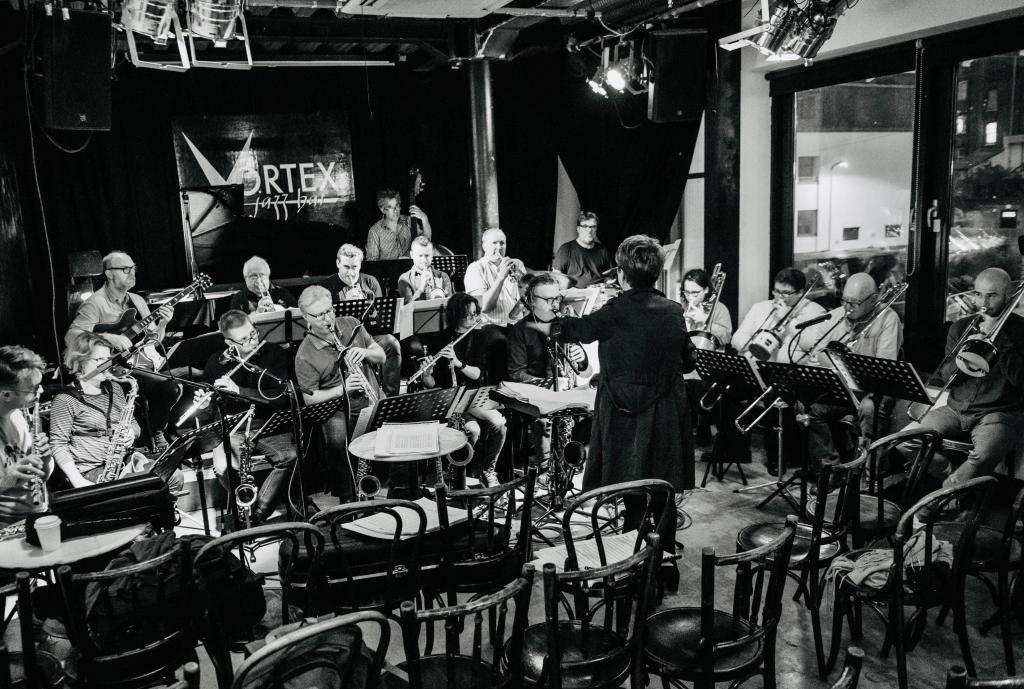

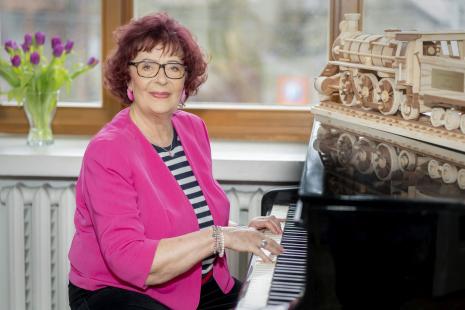
Image credits
1.Drew Gardner
2. Courtesy of Nikki Iles
3.Monika S Jakubowska
4. Dave Stapleton
Women to the Fore #19: Nikki Iles
We talk to Nikki Iles, pianist, composer and educator
How would you describe yourself and what you do?
I'm a jazz musician, first and foremost, with composition a very natural extension of that. I'm a pianist, but went to college as a saxophonist and to the Junior Royal Academy on the clarinet. So I'm a multi-instrumentalist, but piano and composition are what I'm known for.
What were your earliest experiences of music, and how did they shape you?
Before school or anything like that, my dad's record collection had a huge influence on me. Sounds from Ella Fitzgerald, Oscar Peterson, Frank Sinatra, Erroll Garner, George Shearing, and Nat King Cole wafted through the house - this unofficial learning through osmosis was crucial for me as a self-taught jazz musician and was where it all started for me.
I'm a jazz musician, first and foremost, with composition a very natural extension of that. I'm a pianist, but went to college as a saxophonist and to the Junior Royal Academy on the clarinet. So I'm a multi-instrumentalist, but piano and composition are what I'm known for.
What were your earliest experiences of music, and how did they shape you?
Before school or anything like that, my dad's record collection had a huge influence on me. Sounds from Ella Fitzgerald, Oscar Peterson, Frank Sinatra, Erroll Garner, George Shearing, and Nat King Cole wafted through the house - this unofficial learning through osmosis was crucial for me as a self-taught jazz musician and was where it all started for me.
What led you to learning the clarinet and piano initially?
I had a brilliant music teacher at primary school. It’s so sad that there are so few dedicated primary music teachers now. He encouraged every member of that school to pick up an instrument. His name was Douglas Tate - I didn't realise until many years later that he was a world-class harmonica player - and he had everyone playing the harmonica!
He was a classical player, but he loved Stevie Wonder. The harmonica’s a really expressive instrument, just like the voice and the guitar and all those instruments that are able to bend notes for expression. I think he started a fire in me, there, in primary school.
I had a brilliant music teacher at primary school. It’s so sad that there are so few dedicated primary music teachers now. He encouraged every member of that school to pick up an instrument. His name was Douglas Tate - I didn't realise until many years later that he was a world-class harmonica player - and he had everyone playing the harmonica!
He was a classical player, but he loved Stevie Wonder. The harmonica’s a really expressive instrument, just like the voice and the guitar and all those instruments that are able to bend notes for expression. I think he started a fire in me, there, in primary school.
I grew up in Bedfordshire, which had a great county music programme. Aged 10, I was in the Saturday morning music programme, and at 11, I won a scholarship to the Royal Academy of Music to study clarinet and piano.
I was travelling to London with the opportunity to play all of that fantastic orchestral and chamber music. At that time, I wasn't as far ahead on the piano. I remember my piano teacher saying, “You'll never be a concert pianist”, and I was like, hooray! But she did say, “You're a great chamber music player, a great listener.” I was never comfortable being out front; I was very much a team player. And moving into jazz seemed like the most natural place for me.
What were your first experiences of jazz and improvised music, and what led you to Leeds College of Music?
I didn't know how to improvise - I was having a go, listening to records - imitating my favourite players, including Dexter Gordon, Bill Evans and Herbie Hancock, and just trying to swim alongside them. We didn't have the opportunities in jazz education that we have now - players as young as 13 or 14 are learning all sorts of things that took me years to work out! It was very experiential.
I was on the wrong side of the catchment area for the local high school, which was good for music. So all my musical friends went to this good school, and I went to a pretty awful one. I don't know how I survived - it was really rough! But after a year, a wonderful new head of music called Brian Willoughby arrived from Jersey, brought a load of saxophones, and started a school swing band. No one was really improvising, but there was something about that swing music that got me. At this point, I realised this was where I wanted to be. There was a classic incident where the pianist was sick, and I was asked to step in on the piano accompanying some “jazz names” guesting with the band. I’d never seen a lead sheet and didn’t have a clue about chord charts. But the curiosity was ignited.
When I was 16, I joined the Bedfordshire Youth Jazz Orchestra. It included musicians in their 20s who had been to college, and one of the trumpet players told me I should go to Leeds College of Music [now Leeds Conservatoire, which was the only jazz college in the UK]. It's funny, the chain of events in life. If he hadn't mentioned that, I wouldn’t have known about it - nobody was advising me at school.
It was a wonderful three years for me. There was so much playing, and not so much of the telling you how to do it, which was good for me at that point.
Did you have any early influences or mentors?
Did you have any early influences or mentors?
Growing up, we were a one-parent family and didn't have much money. At 17 years old, I was eternally grateful to John Dankworth and Cleo Laine for a bursary to attend their All Music course at Wavendon. It was life-changing. I met Norma Winstone, who I'm still playing with now; Tony Coe; the Bancroft brothers; Iain Ballamy was also there, he was 14. I felt I was home, with like-minded people. Seeing Norma perform and playing with Tony Coe was unbelievable. It was hugely significant for me.
In those early years after college, I had some important informal mentors. In my early 20s, I ended up in a full-time teaching job at Tameside College in Greater Manchester, and it was tough! I was teaching out-of-work miners, people with special educational needs, B-Tech and A-Level. I look back at that time, and in my first year, I was crying every night and felt really out of my depth, but it was a fantastic department, really vibrant, and I learned a heck of a lot.
During that time, one of the mature students on the course,a great bass player, asked me to do a gig in Oldham Library with his brother-in-law. I agreed, and that was my first meeting with Mike Walker, the world-class guitarist from Manchester, who's still a big part of my musical life as a friend and unofficial mentor 40 years later.
I met all the Manchester crew, and was extremely lucky to be involved as a founding member of the Creative Jazz Orchestra - an initiative created by a very enlightened jazz officer, Nick Purnell. It was a northern-based large ensemble, with a pool of musicians ready to play any line-up needed.
We worked with these incredible musicians: Anthony Braxton, Mark-Anthony Turnage, Mike Gibbs, Vince Mendoza, Kenny Wheeler, and others. We were in our 20s, and it was just life-changing. It definitely planted a deep seed in me regarding large ensemble writing, and it was fascinating experiencing the different ways each composer came to the group with their music.
Investing in musicians at that age with these kind of experiences really paid off. For example, Andy Schofield, our lead alto is now in the Czech Republic running the national big band in Prague and initiating so much music. And now I'm keen to pay back that investment and create opportunities for young musicians to experience that kind of level of music. I’ve got a lump in my throat thinking about it.
You collaborated with many big names in the jazz world including Anthony Braxton, Kenny Wheeler, Norma Winstone. What was it like working with such major figures when you were still relatively young? What did you learn from these collaborations?
People like Norma, Kenny, Stan Sulzmann - they are the musicians I grew up with, they are my unofficial musical mentors - it's a dream to work with them. They made me realise I have to believe in myself because that generation doesn't over compliment with “Great job” etc. The fact that you're on the stage with them and they call you back - that’s enough. So I learned to get the music right first - you know yourself when you've felt the flow, and - by nature of what we do in improvising - sometimes it's not as free-flowing as the last time... that's okay.
What I learned from somebody like Norma and Stan was that strength doesn’t mean you can’t show fragility in the music. All the people I love have both, Kenny Wheeler, Bill Evans, Keith Jarrett, Charlie Haden - they've all got that. It's human, isn't it? That's what we're trying to convey…humanity. We're not machines.
And Norma is one of these people with great humour. She can go from having a fantastic time, with lots of humour, to then being very serious about the music. So I try and pass that on to younger generations.
How did your career develop as a composer?
I started writing when I was in the group Emanon, with my first husband, trumpeter Richard Iles and with Mike Walker and Ian Dixon. Having been in the Creative Jazz Orchestra, we were all fizzing with energy for something new for us. We had about 10 years of having a wonderful time as a group of young people, developing and growing together. This was my first real platform for writing.
I also received a few early commissions, including from Sheffield Jazz. I wrote music inspired by AS Byatt’s short stories and for the sculptor Barbara Hepworth. I wasn’t conscious of it at the time, but strong females featured a lot in the music I was writing. I wrote another commission about Red Ellen, Ellen Wilkinson, a Labour Minister for Education who walked 300 miles from Jarrow to parliament with the workers to protest for workers' rights.
Then, in the early 1990s, I received a commission for the Ellington Centenary with the London Sinfonietta. It was daunting at first, but such a great experience and again the curiosity for bigger forces was ignited. I think John Surnam put me up for this.
I always tell my students, don’t wait to be asked, just write. I’d already written a set of pieces called the Printmaker Suite - celebrating the role of women in jazz - and it was retrospectively commissioned for the Creative Jazz Orchestra. The line-up was different to the original and included a French horn and cello. It bridged my classical background, because I love all that music too.
What does your appointment as Principal Conductor of the NDR Big Band mean to you, and what do you hope to achieve in this role?
It means so much to me to have the band and management behind me in this appointment - and on reflection, it feels like all the lanes of my life have been moving towards this. I would never have imagined my life would take this path. I'm also proud to be first woman in the whole NDR organisation to lead an ensemble, which I hope paves the way for more!
It came about through their wonderful open call for composers. Writers of all ages are encouraged to send in scores, and once a year, the ones that get through the first stage get a play of their piece with the band. Then there’s a vote, so it's down to the musicians, which is lovely. If they like the music, you are invited to come for a week. I've always looked at these radio bands as a pinnacle in the big band world.
To be honest, until recently, I've never had an arranging lesson or a composition lesson. This didn't hold me back in small groups, but did hold me back a little as there is so much history in the music, and a big band is a different platform. There is so much to learn. I’ve played in so many big bands and large ensembles myself, and I’ve always taken note. I'm always listening and thinking about sounds and combinations of instruments and ultimately searching for my own sound.
So it means a heck of a lot, and it's a big challenge. I'm 62 now, and instead of slowing down my musical life is ramping up! I'm excited about that. I had a really warm welcome right from the start, from the band. They want to strengthen the links between London and Hamburg. Historically, the band has had many connections with UK musicians, and to be part of that lineage is a real privilege.
Having spent time as Artist in Residence with the NDR Bigband in 2023, what insights from your residency year will shape how you develop the band as its leader?
I know the strengths of the musicians, which is great. It is such a great band, which I can feel is developing my writing. Most of my commissions in the early years were for less experienced groups with limited rehearsal time, so those things have to be considered when you want a decent performance. The luxury of a week's rehearsal is something we don't ever experience in the UK. But often I want more time to get deeper into the music - so this has been a revelation! And I’d like to bring in some new artists - Ingrid Laubrock and John Beasley would be wonderful.
There was an incredible project we did with the Creative Jazz Orchestra, a Mark-Anthony Turnage piece arranged by Mike Gibbs. This would feel like the perfect mix for the great Ensemble Modern players and the jazz musicians of the NDR - this is music never heard outside the UK.
I want to try new things that help connect younger writers, to workshop their music and be part of the NDR family. I also want to get in there and feel the job and not force anything too quickly. For me personally, it’s about making connections with new and existing musicians.
You'll be the first female conductor of the NDR Bigband. In previous interviews, you've talked about there being "a few moments" that have tested your determination as a woman in the jazz world. Can you share how you navigated these?
There have been moments. Years ago, I had a piece representing the UK at a concert celebrating European big band composers in Slovenia. Another composer, an older guy, said to me, “Great tune, who arranged it for you?” I laughed inside and realised in his generation, there really weren’t many women in the big band world at all. Or one festival saying, “We already have our one female lead band”.
Looking back, gender didn't seem like an issue early on because I just found the people I wanted to play with. The" Me Too" movement made me think again - actually, there were things. Like being left out of musicians’ discussion of tunes to play before the gig. The leader would steam into the Bridge of Cherokee with me trying to figure out what tune we were playing - unnecessary. The school of hard knocks - whatever doesn’t kill you makes you stronger - there's some truth in that!
I was asked at my NDR interview whether being a woman brings something different to being a conductor. I paraphrased Nadia Boulanger and said, “At 62, I’ve got over the fact that I'm a woman, I'm just here to do a job.” It’s not about my gender.
But composition is different. I saw an interview with Maria Schneider, who had lessons with Bob Brookmeyer, the great writer and trombonist. When she told him she was trying to write aggressive stuff to keep in with the guys, he replied: “Maria, write your music, we really need some women's stories”. That resonated with me. As a female writer, I enjoy the FULL spectrum of emotions!
If I'm not booked for something, I try not to think that it's about me being a woman. You can get into a negative mindset that affects the music. Maybe I'll think, "Okay, I need to work on that" - it makes it more positive. Not everyone can like you’re playing, especially if you're being honest and personal. That's how I've dealt with things - not thinking of it as being about my gender.
The jazz world has been discussing gender representation extensively in recent years. What are your thoughts about this, and how best to support female artists and composers?
I think most organisations are genuinely trying to do better, and this is evident in the line-ups at festivals, gigs and the staff in music colleges. I’ve witnessed - particularly in the groups of younger musicians - a real effort to break out of friendship groups to include musicians from other scenes, which is only a good thing. For me, the crucial word is opportunity .
When someone has the potential to do that gig, give them that opportunity when it arises. Not just because of their gender or the colour of their skin, but because it’s someone you think could have a really good crack at it. My appointment was exactly that - I was given that opportunity and a chance to grow and I've written so much music in the last three years. Sadly, something that never happened for me in the UK.
In the big band world, it’s still mostly all guys out there. Or there's one woman on baritone or flute. We need to work harder to give opportunities to women at these earlier stages. And the environment needs to be comfortable for everyone and less gladiatorial.
Standing in front of 18 guys isn't for the faint-hearted. I like to work hard in the rehearsal process, but bring some humour to it. You've got 18 experts with egos in the room, so there's juggling involved. All the teaching I've done is a good foundation for that.
Now, there are great initiatives, like Jazz Camp for Girls, and Issie Barratt at the National Youth Jazz Collective, who has been brilliant at creating a culture open to everybody. There are many strong women big band writers in the UK too - Emma Rawicz, Josephine Davies, Tori Freestone, Olivia Murphy. A few of them have said that seeing me up there, like I saw Maria Schneider, made them think, "if she's up there, I can do it." You need to see somebody like you doing it.
When I was in my early 20s, there were hardly any women, particularly here in the UK - Geri Allen, Carla Bley, Joanne Brackeen. For me, Norma Winstone broke the ceiling in a strong but unforced way. In that crowd of the best musicians in Europe, she was fearless - still is. It's about seeing it's possible.
What advice would you give to young people embarking on a career in creative music?
Be very open about music. It might not be jazz that informs your jazz.
Stan Sulzmann gave me some advice as a younger musician. He said, “ You’ll imagine your life is on a certain path - beware of that - keep open to surprising left turns.” There you have it - it's just happened to me.
Which female or non-binary composers and artists are you most excited about at the moment?
I’m going to include some older ones too - Geri Allen "Etudes" with Charlie Haden and Paul Motian, Joanne Brackeen "Special Identity”, Shirley Horn “You Won’t Forget Me", Norma Winstone "Somewhere Called Home" on ECM records, Kris Davis “Diatom Ribbons", Melissa Aldana “ Echoes of the Inner Prophet”.
Also, Artemis “In Real Time” with Ingrid Jenson and co, bassist Linda May Han Oh, TerriLynne Carrington and pianist Myra Melford. Big band music from Christine Jenson “Harbour”, and Jihye Lee ‘Infinite Connections". From the UK, Emma Rawicz “Chroma”, Laura Jurd, Yazz Ahmed, Karen Sharp, Harben Kay and Tori Freestone, to mention a few.
Also, Artemis “In Real Time” with Ingrid Jenson and co, bassist Linda May Han Oh, TerriLynne Carrington and pianist Myra Melford. Big band music from Christine Jenson “Harbour”, and Jihye Lee ‘Infinite Connections". From the UK, Emma Rawicz “Chroma”, Laura Jurd, Yazz Ahmed, Karen Sharp, Harben Kay and Tori Freestone, to mention a few.
What are your aspirations for the future? What ambitions do you still want to fulfil?
I love the American band Oregon, a big influence. My fantasy project would be to arrange for a really unusual ensemble. It would be Oregon /Ralph Towner with words with two of my favourite European singers, Norma Winstone and Maria Pia Da Vito. It would be a beautiful project - in my dreams!
Listen to Nikki's latest album - Face to Face with NDR Big Band on Edition Records.
I love the American band Oregon, a big influence. My fantasy project would be to arrange for a really unusual ensemble. It would be Oregon /Ralph Towner with words with two of my favourite European singers, Norma Winstone and Maria Pia Da Vito. It would be a beautiful project - in my dreams!
Listen to Nikki's latest album - Face to Face with NDR Big Band on Edition Records.
Image credits
1.Drew Gardner
2. Courtesy of Nikki Iles
3.Monika S Jakubowska
4. Dave Stapleton