Back to list
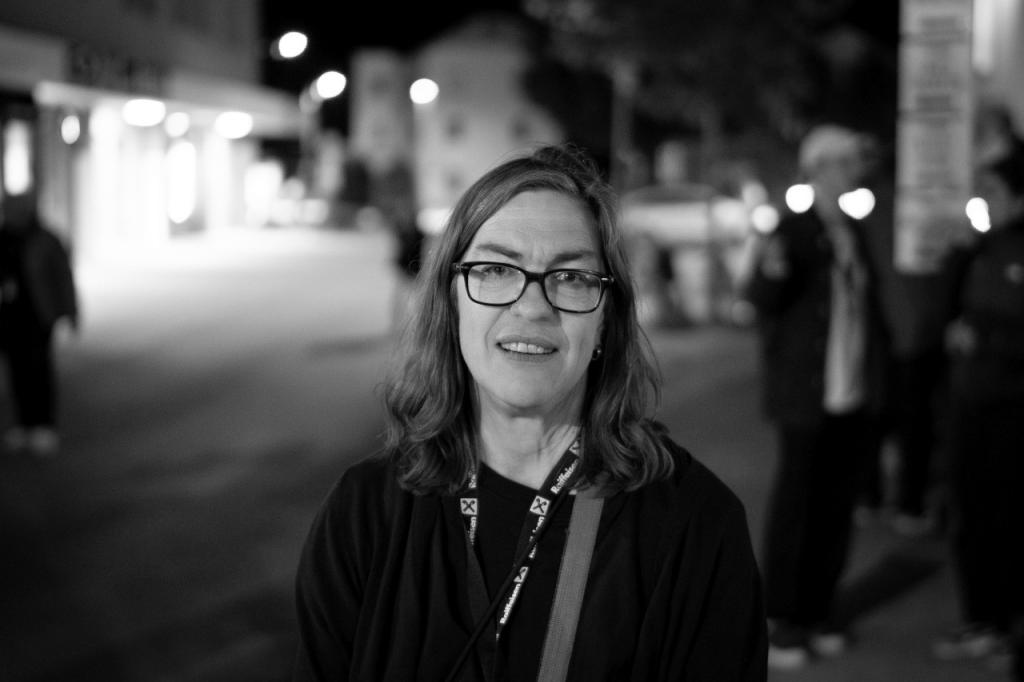
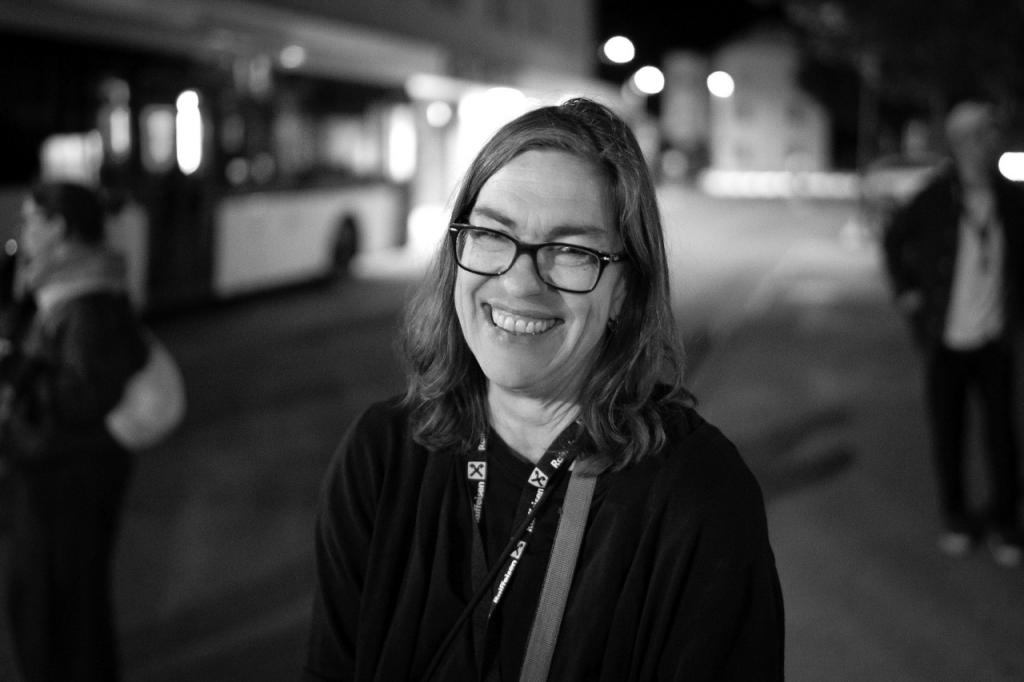
Women to the Fore #20: Judith Kobus
We talk to jazz PR, Judith Kobus of cubus-music
How would you describe what you do?
My main focus is PR, but I also work in artist relations and do coaching with musicians. It's all about communication with people – that's the foundation of everything I do.
What were your earliest experiences with music, and how did they shape your future career path?
I grew up with classical music and jazz. My mother was really into it, and we had the radio on all day. We had a piano, so I got piano lessons, saxophone lessons, and even singing lessons. Music was always around. Even now, I always put on the radio as soon as I finish work because besides music, the radio is also one of my most important sources of information.
Can you tell us about how your early career began? What did you study and what happened next?
After high school, I worked in Vancouver as a nanny for three years to improve my English. I returned to Münster to study art history, and I graduated with a Magister degree. This led me to museum work, but not in curatorial roles - instead, I organised event programmes for exhibitions, with readings and live music.
I started as a student volunteer at the Landesmuseum in Münster. Then I met someone who worked for the Bundeskunsthalle in Bonn, which was a big thing for me. I worked there as a freelancer and at the Sculptura in Münster.
As my career developed, I started to switch from the fine arts side to music. I still love art, but I couldn’t see myself working in a museum long-term. I also realised that you can’t make a living as a freelance museum worker, and started to think that music was the right professional field for me.
I always felt at home in the music world, so I looked into different ways to enter the business and started working at a booking agency. I found my niche in jazz; I got this feeling, which I still have, that it's a family. You meet so many people, and you meet them again and again and they start to become your friends.
What prompted your transition from booking to specialising in jazz PR?
The agency focused on world music and gala events. I went on tour with a couple of Cuban musicians for several months, and learned so much about touring life and the music business, which got me thinking about setting up my own business.
This was 2007, and jazz had a small but growing percentage of the music market. There's a jazz magazine in Cologne called Jazzthing, and they have a programme supporting young artists called Next Generation. At that point, they were looking for a Next Generation booker. They took me by the hand and brought me to events like Womex.
Through this connection, I met a woman who worked for the German association, Jazz and World Partners. She was a PR person and introduced me to lots of journalists and her ways of working. Through her, I learned, for example, how many weeks before a release you start contacting journalists. This is still a foundation for my PR practice today.
The Next Generation project brought me to a festival in Burghausen, where I was booking the bands for their Next Generation day. At a certain point, they asked me, "Judith, you're out there so much and know so many people, can you help us get more journalists to come to our festival?" From then on, I slipped more and more into PR. At a certain point, especially when working with festivals, I decided I didn’t do booking anymore. PR was my business!
Did you have any informal mentors or people who inspired and influenced you in your earlier career?
The label chief of the New Generation releases, and the woman who worked in PR that I mentioned before (who is not in the business any more), they evened the path for me and helped me spread my wings. I'm really grateful for that.
What led you to establish cubus-music as your own PR agency and do you offer services beyond PR and marketing?
I had already set up cubus-music in 2007 because, in order to work as a booker, I had to have my own company. The name came by chance when the label chief and I needed one for an article in Music Week. He immediately said "cubus-music" referring to my last name, but I was rather thinking of the German chocolate bar, Ritter Sport. Its slogan is "quadratisch, praktisch, gut" – square, practical, good. So this was the “birth” of my agency name.
As well as PR, I work with organisations and musicians to help them find funding, and I also offer coaching to musicians. I slipped into artist relations by chance, and I love it. With the Monheim Triennale, I jump in to help organise travel, visas, welcome artists, and make sure they get band-aids or aspirin if needed! It’s about being there, communicating, and making everyone feel comfortable.
Your roster includes both individual artists and major events. How do you balance the needs of these different types of clients?
It's a matter of having the year in view. There are phases where I don't take on any album promotion, for example. With festivals, I usually work with somebody who is part of the local festival team – I support them to get in touch with journalists, and then I host the journalists during the festival. But most of the time, there are people in the festival team doing the regular everyday media work. That’s why I can work with different festivals at the same time.
I need at least eight to ten weeks for an album release, so I structure the year around this. I try to have a focus on certain things at any one time. I also make sure that the kind of music I’m representing doesn't clash - I’m not trying to achieve coverage for two piano trios at the same time, for instance. I can't be my own competition.
How would you describe your approach to PR, and what makes specialising in jazz uniquely rewarding and challenging?
What’s really important is to know who's out there and who's interested in the type of music I'm working with. I sit down and check who might be interested in, for example, a piano trio with electronics or woodwinds. I put together individual sampling lists. I'd say I know 80-90% of the people working with jazz in the German-speaking countries personally. This makes a real difference.
It’s difficult for people wanting to start in the PR business – you have to build up your network first and really get to know the people involved. Clients need to know you're not just using the scatter-gun approach, hoping someone picks up the topic.
What makes it rewarding is, first of all, the music itself. And secondly, the family feeling within the scene. Within a broad understanding of jazz as improvised music, you also have a broad variety of different people, and they’re people I enjoy hanging out and exchanging ideas with.
How do you decide which artists to work with?
On this point, I'm egoistical – I only take on the music I really like. Of course, there has to be a certain quality, but I need to be behind the project; otherwise, it's a waste of energy for me, and for the artist, a waste of money.
I work a lot with two labels, which often send me music asking if it's of interest. They know me well by now. I usually listen to it twice, and sometimes I go back and ask what the person is all about. I don't like to work with difficult people. But the first step is always to listen to the music.
How do you work with artists to grow their public profile and how do you help artists craft narratives about their work, when they may prefer to let the music speak for itself?
First, I tell them, especially when they're young and starting out, that the process needs time. Being discovered and going straight through the roof usually doesn't happen. I've had feedback from musicians I've worked with for a long time - they tell me it's good to have the steady approach.
There’s a German phrase, “Rome was not built in one day” – this is my PR approach. As a musician, you have to build up relationships with the media over time. They need to get to know you and see how you develop.
I work with the artists to find stories that make it easier for people who don't know them – journalists or organisers – to understand their music. I also ask them to do exercises like the elevator pitch – describe your music in five sentences, or a couple of minutes. It forces them to think about how to pitch themselves.
A story makes it much easier to talk to journalists about an artist and their work. If you think about it, it's kind of arrogant for a musician to say, "Here's my music, think what you want." You need your audience, you need the people who listen to your music. It's good for musicians to think about their music in terms of words. It gives you a feeling of what it means to write and comment on the music you present.
I also tell musicians to do their own booking for the first couple of years, because you need to understand it from the inside, and get an idea of what these people – the booker and the organisers – do.
Why do you think there are so few jazz publicists? And so few pan-European music PR companies?
I think there are two reasons why you don't have many PR people working across different European countries. First, it takes time to really build up a network. When do you consider yourself to be a professional publicist? When is your network big enough? Even in the three German-speaking countries I work in – Germany, Switzerland, Austria – this is a 24-hour job.
Second, the media work so differently in different countries. I'm in touch with people from Poland who work on festivals, but I don't know about their radio stations and how they work with playlists. It's always good to have somebody in the country who knows their media well.
Nevertheless, with festivals I do work internationally, relying on my network as much as on the contacts I already have.
How has the landscape of music marketing and PR changed since you started, particularly in the jazz sector?
The jazz media is decreasing in size. For example, in Germany, there are many older journalists who focused on jazz and are now retiring. There are also jobs in public radio or magazines that are being discontinued, so some big challenges. I really hope that we'll get a new generation of journalists growing into the jazz business. Of course, social media is more important now than five or ten years ago. I don't work with social media at all – I focus on the traditional media and leave it to the young people who can do it so quickly and naturally.
A couple of years ago, a festival I worked with said they wanted to pause our work together to focus on social media. A year later, they reached out to to me again – you need a mixed approach. Traditional media outlets have a broader space to delve into a topic and explore certain issues. With three sentences on a social media platform, you can’t get across the depth.
My work with Jazzfestival Saalfelden is an example of how I find new ways around the issue of the shrinking jazz media. Saalfelden is well known for downhill biking, so I successfully pitched an interview with Mario [Jazzfestival Saalfelden’s artistic director] in a cycling magazine. Or I find topics for travel journalism.
As a woman in music PR, have you faced specific challenges?
I haven’t experienced any problems from being a woman in the jazz world. The challenges are more related to being ‘the lone wolf’, the person who has to stand up for herself, rather than my gender. I'm lucky not to have had any bad experiences.
How has the industry evolved in terms of gender representation? What change is still needed?
On stage, it’s obvious that there’s been a shift in the gender balance. But off stage, not so much, especially within the media. There aren't many female journalists in jazz, especially young women.
The problem is that our business, especially in Germany, is becoming extinct, with people getting older and older. The word "jazz" is still unsexy and not as interesting as pop for most young people. The question we need to answer is how do we create different connotations for the word jazz.
When I worked for the German Jazz Prize earlier this year, we approached a local TV station. Their response was, "It doesn't work for TV because only older men are sitting in the audience." Give me a break! This was despite a diverse line-up at the awards. But it’s this preconception they have in their mind as soon as they hear the word jazz. It’s more of an issue in Germany, and other countries are further ahead on this. We need to make jazz sexy again.
There have been lots of times where I have gone to a concert with a 15 or 16-year-old, and they're like, “Whoa, this is jazz?” They’re impressed, but they don’t want to go to clubs with people their grandparents' age. We need to break down these perceptions.
What's the best advice you received early in your career that still guides you today?
There are two sayings in German that work in English as well: "Heads up, even if your neck is dirty – if you have problems, you face them; and "A gig is a gig" – even if you’re not feeling like doing something, you do it. This is from a Swiss friend who was Jazz producer at Radio SRF 2 Kultur, Switzerland. When I complain or need motivation, I think to myself, "Judith, a gig is a gig."
What advice would you give to young people interested in pursuing a career in music PR?
Learn how to network, and build up your network. Many people understand networking to be about what they can gain from it, but networking is about give and take. “Do, ut des.” You give and you hope the other person might give something back.
I always call it "facelifting" – go out there and show yourself, address people. You can't be a PR person without communication. You have to overcome shyness. When you walk into the Jazzahead for the first time, you think, "What is this? They're all crazy!" You have to overcome that. Even if you do a lot via email, talking to people in person is so important.
You’ve also got to think about the hours you want to work and understand that PR is not a nine-to-five job. And above all, love what you do.
What are your ambitions for the future?
I always say it's the best job in the world, and I wouldn't want to change it. I really hope this work keeps me alive and kicking for the next years. My ambition is to work on changing the connotations of jazz so that the media becomes more interested. It's a collective task for all of us.
Which female or non-binary artists are you most excited about at the moment?
yuniya edi kwon (aka eddy kwon), a violinist, vocalist, poet, and interdisciplinary performance artist living in New York, really impressed me at the Monheim Triennale. She brings together composition, improvisation, movement and ceremony. As far as I know, she's going to release a CD soon – she recorded it at a studio in Cologne after Monheim.
The other is Ingrid Laubrock, a German sax player who lives in New York too. She's really impressive both in terms of performance and composition. Funny enough, she was born in the same city as I was. I really admire her work, and I'm happy that the German cultural media are finally starting to recognise her as a great musician.
www.cubus-music.de
Image: Frank Schindelbeck
How would you describe what you do?
My main focus is PR, but I also work in artist relations and do coaching with musicians. It's all about communication with people – that's the foundation of everything I do.
What were your earliest experiences with music, and how did they shape your future career path?
I grew up with classical music and jazz. My mother was really into it, and we had the radio on all day. We had a piano, so I got piano lessons, saxophone lessons, and even singing lessons. Music was always around. Even now, I always put on the radio as soon as I finish work because besides music, the radio is also one of my most important sources of information.
Can you tell us about how your early career began? What did you study and what happened next?
After high school, I worked in Vancouver as a nanny for three years to improve my English. I returned to Münster to study art history, and I graduated with a Magister degree. This led me to museum work, but not in curatorial roles - instead, I organised event programmes for exhibitions, with readings and live music.
I started as a student volunteer at the Landesmuseum in Münster. Then I met someone who worked for the Bundeskunsthalle in Bonn, which was a big thing for me. I worked there as a freelancer and at the Sculptura in Münster.
As my career developed, I started to switch from the fine arts side to music. I still love art, but I couldn’t see myself working in a museum long-term. I also realised that you can’t make a living as a freelance museum worker, and started to think that music was the right professional field for me.
I always felt at home in the music world, so I looked into different ways to enter the business and started working at a booking agency. I found my niche in jazz; I got this feeling, which I still have, that it's a family. You meet so many people, and you meet them again and again and they start to become your friends.
What prompted your transition from booking to specialising in jazz PR?
The agency focused on world music and gala events. I went on tour with a couple of Cuban musicians for several months, and learned so much about touring life and the music business, which got me thinking about setting up my own business.
This was 2007, and jazz had a small but growing percentage of the music market. There's a jazz magazine in Cologne called Jazzthing, and they have a programme supporting young artists called Next Generation. At that point, they were looking for a Next Generation booker. They took me by the hand and brought me to events like Womex.
Through this connection, I met a woman who worked for the German association, Jazz and World Partners. She was a PR person and introduced me to lots of journalists and her ways of working. Through her, I learned, for example, how many weeks before a release you start contacting journalists. This is still a foundation for my PR practice today.
The Next Generation project brought me to a festival in Burghausen, where I was booking the bands for their Next Generation day. At a certain point, they asked me, "Judith, you're out there so much and know so many people, can you help us get more journalists to come to our festival?" From then on, I slipped more and more into PR. At a certain point, especially when working with festivals, I decided I didn’t do booking anymore. PR was my business!
Did you have any informal mentors or people who inspired and influenced you in your earlier career?
The label chief of the New Generation releases, and the woman who worked in PR that I mentioned before (who is not in the business any more), they evened the path for me and helped me spread my wings. I'm really grateful for that.
What led you to establish cubus-music as your own PR agency and do you offer services beyond PR and marketing?
I had already set up cubus-music in 2007 because, in order to work as a booker, I had to have my own company. The name came by chance when the label chief and I needed one for an article in Music Week. He immediately said "cubus-music" referring to my last name, but I was rather thinking of the German chocolate bar, Ritter Sport. Its slogan is "quadratisch, praktisch, gut" – square, practical, good. So this was the “birth” of my agency name.
As well as PR, I work with organisations and musicians to help them find funding, and I also offer coaching to musicians. I slipped into artist relations by chance, and I love it. With the Monheim Triennale, I jump in to help organise travel, visas, welcome artists, and make sure they get band-aids or aspirin if needed! It’s about being there, communicating, and making everyone feel comfortable.
Your roster includes both individual artists and major events. How do you balance the needs of these different types of clients?
It's a matter of having the year in view. There are phases where I don't take on any album promotion, for example. With festivals, I usually work with somebody who is part of the local festival team – I support them to get in touch with journalists, and then I host the journalists during the festival. But most of the time, there are people in the festival team doing the regular everyday media work. That’s why I can work with different festivals at the same time.
I need at least eight to ten weeks for an album release, so I structure the year around this. I try to have a focus on certain things at any one time. I also make sure that the kind of music I’m representing doesn't clash - I’m not trying to achieve coverage for two piano trios at the same time, for instance. I can't be my own competition.
How would you describe your approach to PR, and what makes specialising in jazz uniquely rewarding and challenging?
What’s really important is to know who's out there and who's interested in the type of music I'm working with. I sit down and check who might be interested in, for example, a piano trio with electronics or woodwinds. I put together individual sampling lists. I'd say I know 80-90% of the people working with jazz in the German-speaking countries personally. This makes a real difference.
It’s difficult for people wanting to start in the PR business – you have to build up your network first and really get to know the people involved. Clients need to know you're not just using the scatter-gun approach, hoping someone picks up the topic.
What makes it rewarding is, first of all, the music itself. And secondly, the family feeling within the scene. Within a broad understanding of jazz as improvised music, you also have a broad variety of different people, and they’re people I enjoy hanging out and exchanging ideas with.
How do you decide which artists to work with?
On this point, I'm egoistical – I only take on the music I really like. Of course, there has to be a certain quality, but I need to be behind the project; otherwise, it's a waste of energy for me, and for the artist, a waste of money.
I work a lot with two labels, which often send me music asking if it's of interest. They know me well by now. I usually listen to it twice, and sometimes I go back and ask what the person is all about. I don't like to work with difficult people. But the first step is always to listen to the music.
How do you work with artists to grow their public profile and how do you help artists craft narratives about their work, when they may prefer to let the music speak for itself?
First, I tell them, especially when they're young and starting out, that the process needs time. Being discovered and going straight through the roof usually doesn't happen. I've had feedback from musicians I've worked with for a long time - they tell me it's good to have the steady approach.
There’s a German phrase, “Rome was not built in one day” – this is my PR approach. As a musician, you have to build up relationships with the media over time. They need to get to know you and see how you develop.
I work with the artists to find stories that make it easier for people who don't know them – journalists or organisers – to understand their music. I also ask them to do exercises like the elevator pitch – describe your music in five sentences, or a couple of minutes. It forces them to think about how to pitch themselves.
A story makes it much easier to talk to journalists about an artist and their work. If you think about it, it's kind of arrogant for a musician to say, "Here's my music, think what you want." You need your audience, you need the people who listen to your music. It's good for musicians to think about their music in terms of words. It gives you a feeling of what it means to write and comment on the music you present.
I also tell musicians to do their own booking for the first couple of years, because you need to understand it from the inside, and get an idea of what these people – the booker and the organisers – do.
Why do you think there are so few jazz publicists? And so few pan-European music PR companies?
I think there are two reasons why you don't have many PR people working across different European countries. First, it takes time to really build up a network. When do you consider yourself to be a professional publicist? When is your network big enough? Even in the three German-speaking countries I work in – Germany, Switzerland, Austria – this is a 24-hour job.
Second, the media work so differently in different countries. I'm in touch with people from Poland who work on festivals, but I don't know about their radio stations and how they work with playlists. It's always good to have somebody in the country who knows their media well.
Nevertheless, with festivals I do work internationally, relying on my network as much as on the contacts I already have.
How has the landscape of music marketing and PR changed since you started, particularly in the jazz sector?
The jazz media is decreasing in size. For example, in Germany, there are many older journalists who focused on jazz and are now retiring. There are also jobs in public radio or magazines that are being discontinued, so some big challenges. I really hope that we'll get a new generation of journalists growing into the jazz business. Of course, social media is more important now than five or ten years ago. I don't work with social media at all – I focus on the traditional media and leave it to the young people who can do it so quickly and naturally.
A couple of years ago, a festival I worked with said they wanted to pause our work together to focus on social media. A year later, they reached out to to me again – you need a mixed approach. Traditional media outlets have a broader space to delve into a topic and explore certain issues. With three sentences on a social media platform, you can’t get across the depth.
My work with Jazzfestival Saalfelden is an example of how I find new ways around the issue of the shrinking jazz media. Saalfelden is well known for downhill biking, so I successfully pitched an interview with Mario [Jazzfestival Saalfelden’s artistic director] in a cycling magazine. Or I find topics for travel journalism.
As a woman in music PR, have you faced specific challenges?
I haven’t experienced any problems from being a woman in the jazz world. The challenges are more related to being ‘the lone wolf’, the person who has to stand up for herself, rather than my gender. I'm lucky not to have had any bad experiences.
How has the industry evolved in terms of gender representation? What change is still needed?
On stage, it’s obvious that there’s been a shift in the gender balance. But off stage, not so much, especially within the media. There aren't many female journalists in jazz, especially young women.
The problem is that our business, especially in Germany, is becoming extinct, with people getting older and older. The word "jazz" is still unsexy and not as interesting as pop for most young people. The question we need to answer is how do we create different connotations for the word jazz.
When I worked for the German Jazz Prize earlier this year, we approached a local TV station. Their response was, "It doesn't work for TV because only older men are sitting in the audience." Give me a break! This was despite a diverse line-up at the awards. But it’s this preconception they have in their mind as soon as they hear the word jazz. It’s more of an issue in Germany, and other countries are further ahead on this. We need to make jazz sexy again.
There have been lots of times where I have gone to a concert with a 15 or 16-year-old, and they're like, “Whoa, this is jazz?” They’re impressed, but they don’t want to go to clubs with people their grandparents' age. We need to break down these perceptions.
What's the best advice you received early in your career that still guides you today?
There are two sayings in German that work in English as well: "Heads up, even if your neck is dirty – if you have problems, you face them; and "A gig is a gig" – even if you’re not feeling like doing something, you do it. This is from a Swiss friend who was Jazz producer at Radio SRF 2 Kultur, Switzerland. When I complain or need motivation, I think to myself, "Judith, a gig is a gig."
What advice would you give to young people interested in pursuing a career in music PR?
Learn how to network, and build up your network. Many people understand networking to be about what they can gain from it, but networking is about give and take. “Do, ut des.” You give and you hope the other person might give something back.
I always call it "facelifting" – go out there and show yourself, address people. You can't be a PR person without communication. You have to overcome shyness. When you walk into the Jazzahead for the first time, you think, "What is this? They're all crazy!" You have to overcome that. Even if you do a lot via email, talking to people in person is so important.
You’ve also got to think about the hours you want to work and understand that PR is not a nine-to-five job. And above all, love what you do.
What are your ambitions for the future?
I always say it's the best job in the world, and I wouldn't want to change it. I really hope this work keeps me alive and kicking for the next years. My ambition is to work on changing the connotations of jazz so that the media becomes more interested. It's a collective task for all of us.
Which female or non-binary artists are you most excited about at the moment?
yuniya edi kwon (aka eddy kwon), a violinist, vocalist, poet, and interdisciplinary performance artist living in New York, really impressed me at the Monheim Triennale. She brings together composition, improvisation, movement and ceremony. As far as I know, she's going to release a CD soon – she recorded it at a studio in Cologne after Monheim.
The other is Ingrid Laubrock, a German sax player who lives in New York too. She's really impressive both in terms of performance and composition. Funny enough, she was born in the same city as I was. I really admire her work, and I'm happy that the German cultural media are finally starting to recognise her as a great musician.
www.cubus-music.de
Image: Frank Schindelbeck