Media chart
Europe Jazz Media Chart - September 2026
A selection of the hot new music surfacing across the continent this month by the top European jazz magazines and websites.
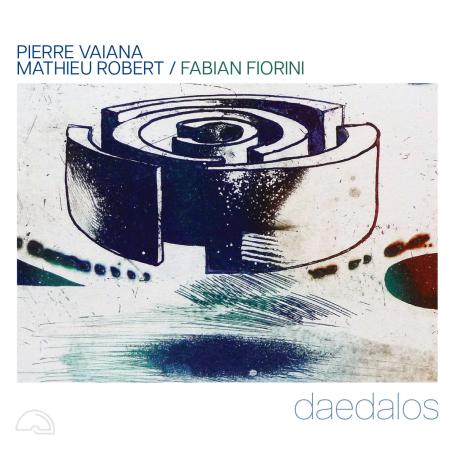
Vaina, Robert, Fiorini: three architects of sound who have built a structure brimming with variations and whimsy, a magical labyrinth of infinite possibilities that keeps us going round in circles without ever finding the way out… (Pierre Dulieu)
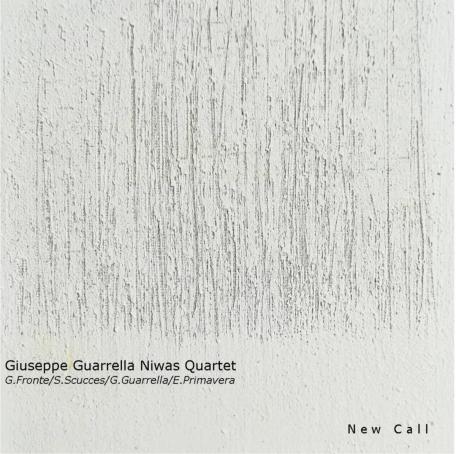
The second album by this quartet centred around the Sicilian double bassist Giuseppe Guarrella. In turn, the four musicians explore the boundaries between written music and improvisation, combining this with a quest to discover the sonic possibilities of their respective instruments. The interplay between the alto saxophone (Gianpiero Fronte), vibraphone (Salvo Scucces), drums (Emanuele Primavera) and double bass is reflected here in six pieces that are clearly rooted in tradition, yet feature numerous shifts in style. There are points of reference to both the Modern Jazz Quartet and Joel Ross and Joe Locke. A distinct past blends with a modern and contemporary perspective. It sounds strikingly accessible at first, but gradually they unfold more profound and adventurous structures. The ideal entry point is the title track, built around a repetitive loop from the drummer and double bassist, whilst the saxophone and vibraphone alternately, and at times together, carry the line forward towards both bop and a more melodic detour. ‘Orto Allegro’ is a catchy fusion of bop and funk, whilst ‘Amina’ is an almost sultry ballad introduced by a solo from Guarrella. The closing track, ‘How ‘Sad’’, seems to be their indirect tribute to Coltrane. A revelation. (Georges Tonla Briquet)
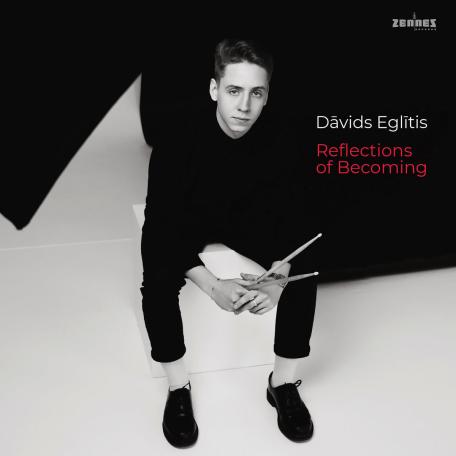
Latvian drummer Dāvids Eglītis has released his debut album made at the Royal Conservatory of The Hague. He is the author of all the compositions and together with Italian saxophonist and clarinetist Claudio Jr. De Rosa, Italian guitarist Enrico Le Noci, Czech pianist Daniel Bulatkin and Indian double bassist Arjun Ramdas has created a convincing contemporary jazz recording with free jazz and straight ahead jazz reflections, features of classical melodism and even an extended four-part opus in the second half of the album. Reflections of Becoming truly demonstrates Dāvids Eglītis' becoming of a jazzman, both in terms of composition and playing his instrument. Another testament to the ability of European jazz universities to unite young talents from different countries, who provide tangible evidence of the meaning of the curriculum. Released on CD as well.
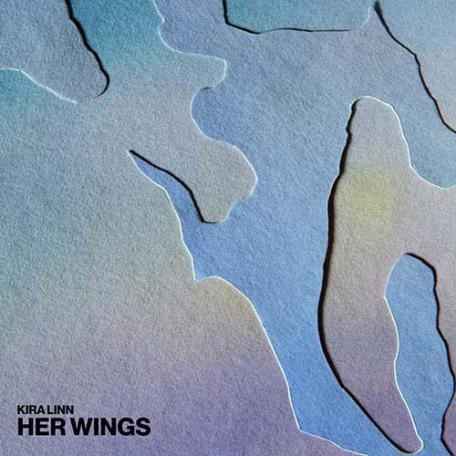
Old Words Take New Wings. Poems can survive for centuries and still speak to our present. This is precisely where Kira Linn begins with Her Wings. Texts by Emily Dickinson, Amy Lowell and Sappho are not simply set to music, but become the starting point for a musical world in which jazz, improvisation and elements of the singer-songwriter idiom intertwine. For this project, the baritone saxophonist and composer has assembled a ten-piece ensemble. It is large enough to give her compositions an orchestral breadth, yet flexible enough to preserve the intimacy these poetic texts require. It is a difficult balance to achieve – and one of the album’s great strengths. Linn works with carefully crafted arrangements without confining her musicians within them. Fully composed passages flow seamlessly into open spaces where individual voices can emerge. What is particularly remarkable is how naturally these improvisations become part of the overall concept. The musicians are given considerable freedom while at the same time seeming to understand exactly the musical language the composer has developed for Her Wings. As a result, ten individual personalities genuinely become one collective voice. The colours of the wind instruments are layered or opened up into transparent textures, while the vocals and texts introduce another narrative dimension. Piano, synthesizers, bass and drums do far more than accompany the music; they play a decisive role in shaping it. And when Linn herself steps forward on baritone saxophone, her warm, distinctive tone carries that combination of strength and sensitivity that has already characterised her previous work. Above all, Her Wings demonstrates how consistently Kira Linn continues to pursue her own path. From album to album, her compositional language becomes more differentiated. The arrangements grow in scope without ever sounding overloaded, while her ideas are articulated with increasing precision. This is not someone composing for a large ensemble simply because size is meant to impress, but because the music itself requires exactly this amount of space. Her Wings is therefore both a musical and a literary album. Old words encounter contemporary sounds, individual voices meet collective expression, and precise composition meets the freedom of improvisation. A fascinating work by an artist whose distinctive musical signature is becoming increasingly clear.
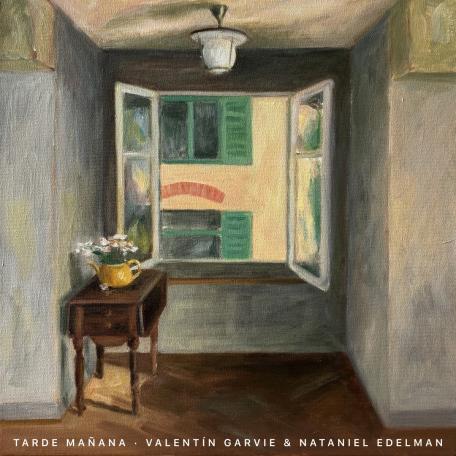
Valentin Garvie, trumpet and Nataniel Edelman, piano. The Argentines, Valentín Garvie and Nataniel Edelman, who here present the duo’s debut album, allow ideas to breathe, unfold their resonances, and attain a particularly lyrical and contemplative dimension. Even here, beauty never presents itself as a certainty; it remains in motion, like a form revealing itself as it changes.
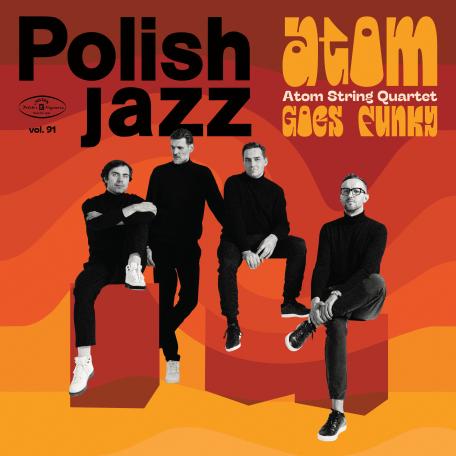
Are you ready for some Polish jazz funk played by an acoustic string quartet? Funk – no drums, no electric piano, no electric anything? Here it goes. Atom String Quartet’s Atom Goes Funky has been released as the 91st volume in the venerable Polish Jazz series which was launched 60 years ago. Instead of originals, it brings covers – new arrangements of the tunes from the ’70s and ’80s from the repertoire of Polish jazz legends such as Zbigniew Namysłowski (“Kujaviak Goes Funky”, “Winobranie”), Bernard Kawka of the Novi Singers (“Torpedo”), Michał Urbaniak (“Basia”, “Body Rub”), Zbigniew Seifert, Krzesimir Dębski, Janusz Muniak, Jarosław Śmietana, Laboratorium, and even pure rock outfits (Perfect). Atom String Quartet is a group of world class improvising string virtuosos: Dawid Lubowicz and Mateusz Smoczyński on violin, Michał Zaborski on viola, Krzysztof Lenczowski on cello. Atom Goes Funky is a surprising look back to their own funky origins (they started in 2011). And a look forward to the unfolding future with their imaginative arrangements, improvisatory skills and unwavering energy. The album, released on CD and vinyl, is equipped with the excellent Polish and English language liner notes.
Concert recordings of today's most important Polish band, the Marek Pospieszalski Octet, captured at London's Cafe Oto during the band's two-day artistic residency. The presented material contains premiere compositions, the outlines of which were given to the musicians just before the concert. The album is therefore a record of creation, a document of the actual creative process of eight individuals forming a cohesive, exceptionally tight-knit and mutually understanding organism. Three tracks, thirty minutes of music that is a multi-threaded conversation testing ideas, exploring possibilities, probing boundaries. The music is subdued, deliberate, though not always calm. Full of nuances and emotions. Intriguing. Mesmerizing.
The original free jazz/avant-garde trio Sulida, with three of Norway's most visionary musicians: Marthe Lea on tenor saxophone, flute, vocals, piano and percussion, Dag Erik Knedal Andersen on drums and percussion and Jon Rune Strøm on double bass, played an excellent concert together with the legendary trumpeter Axel Dörner at the Kongsberg Jazz Festival in 2025. Fortunately, the concert was recorded, and has now been processed into Etiwe – an album of delicious improvisation, which at times swings almost uninhibitedly, and the two musicians in the front line (Lea and Dörner) take us into the heart of free improvisation, but at the same time has something primal African in it, almost like the music of Don Cherry. Lea inserts the theme of Fred Flintstone, that puts the band in a kind of perspective. They cut right to the bone, and there is not a hint of a safety net for miles around. But the roots back to, especially Albert Ayler, are visible. And Lea's vocals can almost sound like something taken from the Sahara desert, or to the area around Rollag, where she lives, and the ending is almost mass-like. This is an exquisite record with roots in free jazz, Norwegian and African folk music, served by four musicians who this evening at the Kongsberg jazz festival, must have delivered one of the festival's highlights!
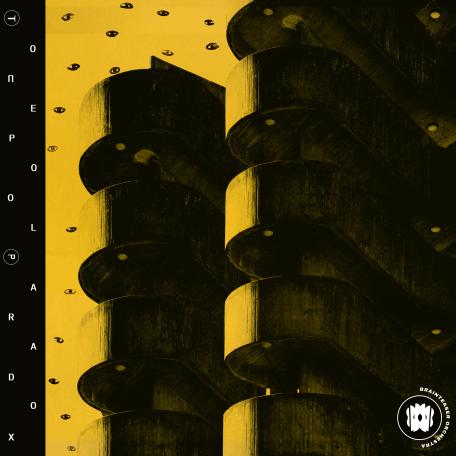
It was right after another week-long residency at the Village Vanguard in Manhattan, New York, that guitarist Jakob Bro wanted to head into the studio to record with the many musicians he’d shared the stage with that week. So while all the musicians were still in New York for a little while longer, before they’d head back out into the world for more concerts. It’s wonderful just to see that large group of musicians listed on paper, of course: Jakob Bro, Brian Blade, Craig Taborn, Chris Cheek, Jesper Zeuthen, Anders Christensen, Larry Grenadier, and Marcus Gilmore. It was incredible enough to see these amazing musicians perform at the Village Vanguard; it’s even more impressive to now hear them working together on an album. At New York’s Power Station, just as they had done earlier at the Village Vanguard, they recorded pieces by both Bro and Paul Motian and reworked them into new, impressive compositions. With “Mumbo Jumbo,” “Drum Music,” “Split Decision,” and “Should’ve Happened a Long Time Ago,” Motian’s contributions far outnumber Bro’s, whose “Pearl River,” “Saturday,” and “Mild” (previously recorded with his renowned trio featuring Thomas Morgan and Joey Baron) received fresh interpretations.
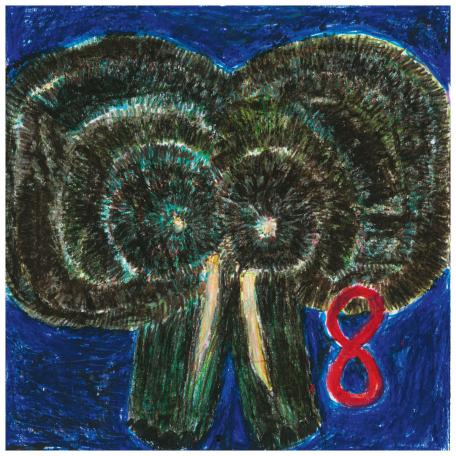
A European offshoot of free jazz saxophonist Noah Howard, a New Orleanian from New York scene performing with a multi continental band in Berlin. Fortunately, it has been reissued. The all passed-away quartet from 1977 is as follow: Itaru Oki - (trumpet), Noah Howard - (alto saxophone), Jean-Jacques Avenel - (double bass) and Oliver Johnson - (drums). Free jazz was as free as as the Stevie Wonder cover, and Europe more embraceable for jazz builders than ever.
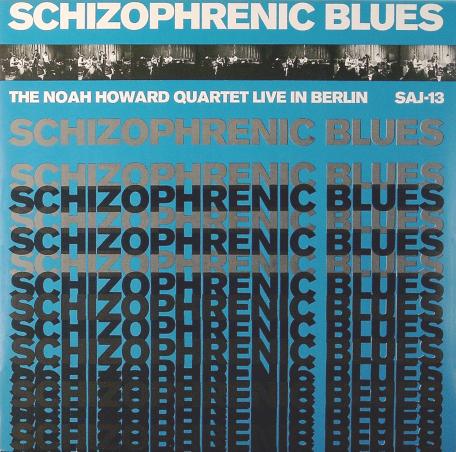
On their fifth album, Portuguese trio The Selva — Ricardo Jacinto (cello/electronics), Gonçalo Almeida (double bass/electronics) and new member Pedro Oliveira (percussion/electronics) — explore new sonic territories while preserving the distinctive identity they have developed since their 2017 debut. Mistérios Negros marks a shift towards greater textural density and less pronounced rhythmic emphasis. While their earlier work often leaned towards mantra-like repetition and electronic hypnosis, the new album broadens their sonic vocabulary.
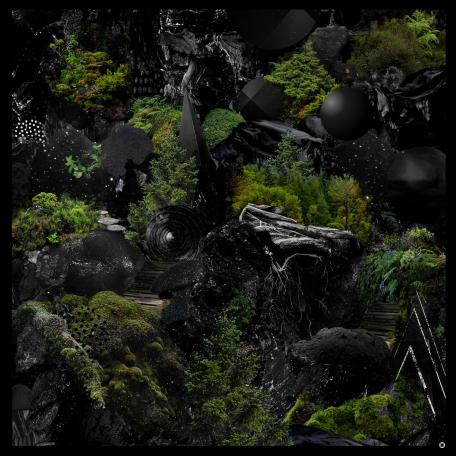
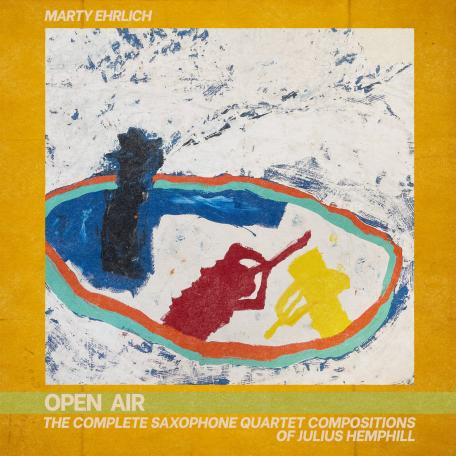
The process of making choices has certainly not become easier after all these years. Which newly recorded music touches, convinces, has extraordinary qualities, and which deserves and needs extra exposure and attention. There are plenty who qualify. For September my path of choice was quite direct and short. The listening of Marty Ehrlich’s (1955) presentation of the compositions of Julius Hemphill (1938-1995) was such a fat pleasure that it was immediate and almost inevitable as my choice. The music is a a strong classic with undiminished brilliance that today's musicians could take up a thing or two from. Music of the finest quality. I was also much pleased by hearing such strong dedicated music from Marty Ehrlich after a longer period that I was not going up (and on) in his music making. Ehrlich was a prominent figure in the beginnings of my diving into jazz. The two albums are simply excellent all around and a milestone. It is proof of the still existing relevance of Hemphill. Marty Ehrlich worked with ten musicians to achieve this: Allen Chase, Rob DeBellis, Sam Furnace, Alex Harding, Brian Landrus, Andy Laster, Jeff Lederer, Lisa Parrott, Jason Robinson and Andrew White. It is a great continuation of the line drawn five years ago by the Hemphill Stringtet of Tomela Reid, Curtis Stewart, Sam Bardfeld and Stephanie Griffin.
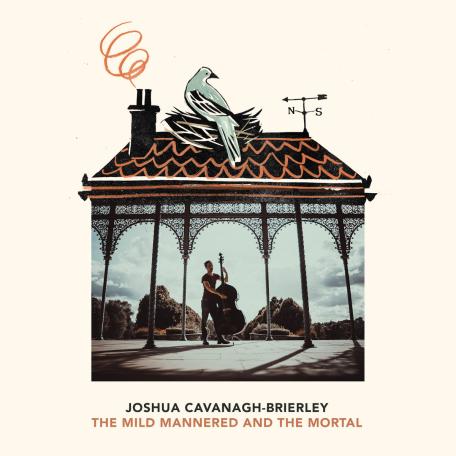
This is the fourth album from Manchester-based bassist/composer Joshua Cavanagh-Brierley. The inspiration for the project, he says, came from a vivid dream that he experienced about a newly unearthed lost Charles Mingus album. When he woke from the dream he first tried to recreate the music he had experienced and “discovered” in his dream. He has a powerful three-horn front line (Graham South – trumpet, Kyran Matthews - tenor sax and Ellie Smith – trombone), plus the regular collaborators from his Angle Shades trio (Richard Jones – piano and Johnny Hunter – drums) who complete the sextet. He says “I was by no means trying to write a Mingus album... nor could I!”, but rather to capture the joy and excitement that Mingus embodied, and in that he has succeeded.
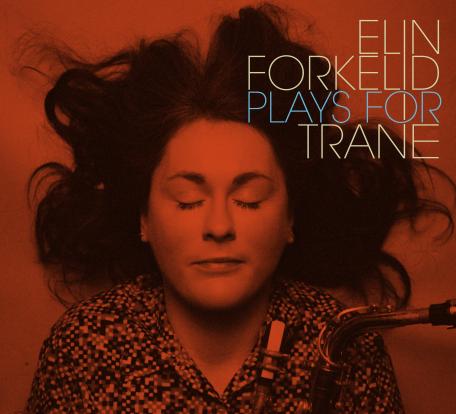
Saxophonist and composer Elin Forkelid has occasionally revisited the legacy, weaving Coltrane influences into her own projects and her work with the group Sol Sol. Now, during Coltrane’s centenary year, the time is right to release *Plays for Trane, Vol. 2*. The supporting musicians are the same as on the previous album, Mattias Ståhl (vibraphone), David Stackenäs (guitar), Wilhelm Bromander (bass), Jon Fält (drums).and the selection of compositions offers both formal breadth and ample scope for interpretive variety.
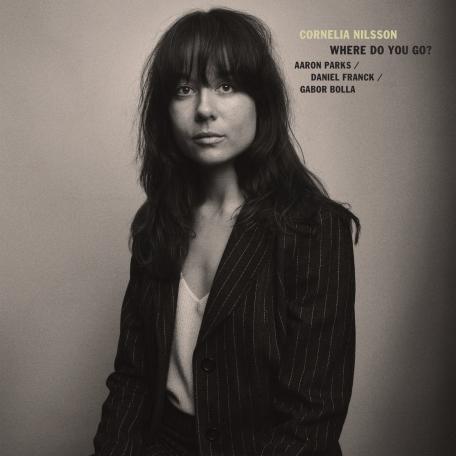
There is a glaring shortage of female instrumentalists (including percussionists), so it is heartening when a drummer, composer, and bandleader like Cornelia Nilsson (b. 1992) emerges and truly makes her mark on the Scandinavian jazz scene. For her debut release as a leader, Where Did You Go, she has teamed up with Hungarian Gabor Bolla (tenor sax), American Aaron Parks (piano), and Swedish Daniel Franck (bass) – apart from Park, they live and work based in Copenhagen. Essentially, the album consists of two contrasting trio sessions – one featuring piano and the other tenor sax – resulting in a release characterized by honest, transparent music. A few tracks contain minor background noise that should have been removed in the mastering, and the songs generally fade out too quickly; however, these are minor quibbles regarding an otherwise excellent release. Nilsson plays with confidence, never dominating or overpowering her fellow musicians, and she masters both assertive, dynamic playing and delicate brushwork.
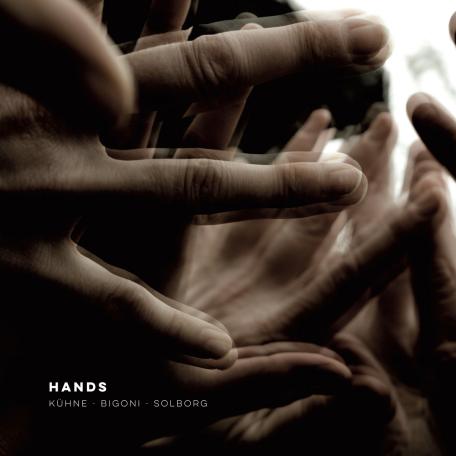
It is our hands that define humanity. And Almut Kühne always accompanies her sung stories with hand gestures. It is also her hands that play the guitar and the clarinet. In this new project, Danish guitarist Mark Solborg shares compositions and improvisation with two multi-talented European improvisers. The album *Hands* consists of three CDs: one recorded in the studio, another live at Koncertkirken (CPH), and the last live at Loft, featuring trumpeter Axel Dörner as a guest. The music is reminiscent of chamber music—both masterful and expressive. This project, like all of Solborg’s, is also deeply meaningful. It is music that affirms that we are always alive, no matter what happens! It highlights the hands as one of the most intimate means of communication. This project has been performed and refined on stage for over five years now; the album preserves this music for eternity.