Media chart
Europe Jazz Media Chart - November 2026
A selection of the hot new music surfacing across the continent this month by the top European jazz magazines and websites.
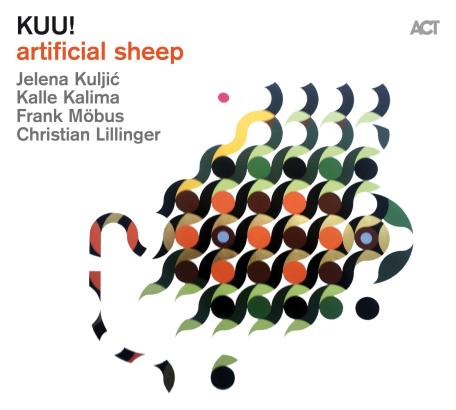
This European supergroup – Jelena Kuljić (voc) from Serbia, Kalle Kalima (g/b) from Finland, Frank Möbus (g) from Germany and Christian Lillinger (d) from Germany – was already mentioned in this chart by Henning Bolte and me in May 2014, when KUU! released SEX GEGEN ESSEN (what a pusling title). When the group KUU! (Finnish for moon) released ARTIFICIAL SHEEP, Christine Stephan immediately chose it for the August 2021 chart. While we wait for the next release from KUU!, I would also like to draw attention to ARTIFICIAL SHEEP. The four musicians met in Berlin 20 years after the fall of the Berlin Wall. Although they come from different corners of Europe, they have diverse but also coinciding musical interests. They share an open approach, and reviews often refer to them as a mix product of jazz, rock, punk and electronic music. I don't think punk and electronica are appropriate predicates. KUU! is hyper-modern jazz with sophisticated structures that are also performed convincingly live. As Kalle Kalima has said: “Good concerts with this band are complete bliss.” And Jelena Kuljić adds: “When we play, it's pure heaven.” Sure, maybe there’s a punk edge in the band’s attitude – at least there’s a socially and politically burning commitment. The lyrics are in English, German, and Serbian, and Kuu! plays original compositions. Kuu! themselves have mentioned the inspiration from the two Ninas: Simone and Hagen. Another reference is the dystopian film BLADE RUNNER with its depiction of paranoia, control, power, and mistrust, total deception in the world, environmental destruction, humans versus robots, and so on. The cult film from 1982 was based on Philip K. Dick’s 1968 sci-fi novel: DO ANDROIDS DREAM OF ELECTRIC SHEEP? The album title ARTIFICIAL SHEEP is precisely taken from this book.
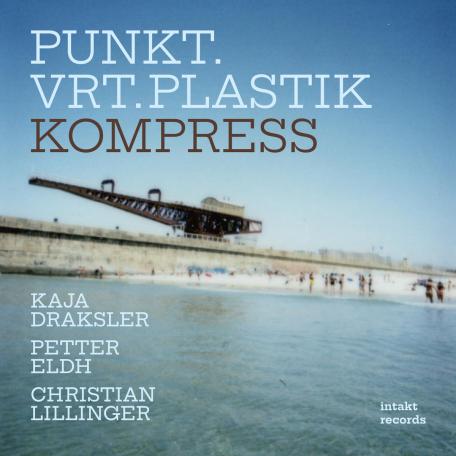
This trio (Kaja Draksler: p ; Petter Eldh: b ; Christian Lillinger: d) has been recording since 2018, and this is their third studio album (a live album was added to their discography in 2022). The three members are incredibly busy and involved in numerous projects across Europe; it’s a lucky thing they still find the time to come together and create this unique music. We still hear the rapid, metronomic beats, the fast and powerful walking bass lines, and the precise, syncopated hammering of the piano. The music retains that melodic-rhythmic mystery, built on syncopation and breaks, hiccups, and sudden silences. At times, the trio offers a rather classical interlude; at others, it embarks on an exploration of epileptic sounds. This trio never ceases to surprise, to disrupt your balance—and there is no greater pleasure than the discomfort of losing your footing and letting yourself go.
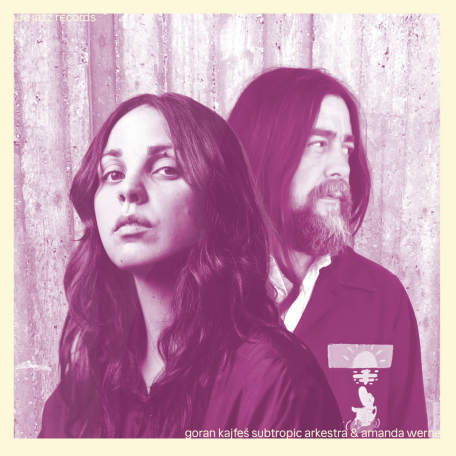
Punk-jazz? Post-rock with a touch of Americana, hard-Shadows? A little bit of all that, but above all, music that’s brimming with originality.

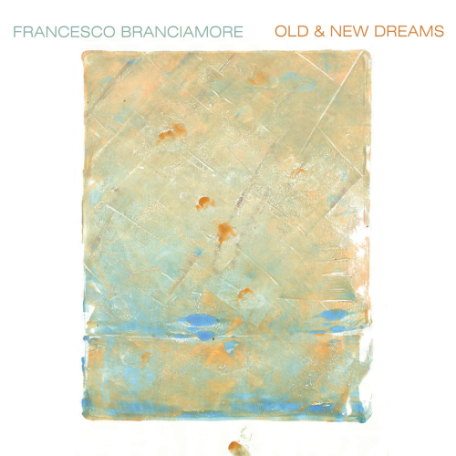
His eclectic touch captures the essence of dreams: voices, images, memories, impressions… He builds the tension through rhythm, repetition and silences, introspection and reflection – a complete keyboard experience. (Bernard Lefèvre)
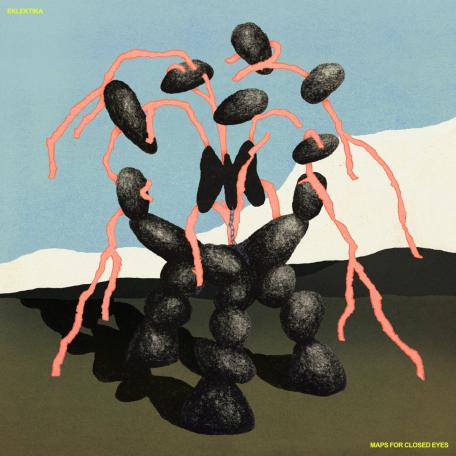
The Latvian instrumental trio Eklektika (Eclectic) has released its second album Maps for Closed Eyes. While their two-year-old debut album Encounters was a more expressive exploration of the possibilities offered by their unusual lineup (drums, saxophone, and clarinet) and sound technology, the second one represents a more expansive journey through diverse musical and cultural influences. Drummer Kārlis Roberts Kalējs, saxophonist Rūdolfs Pēteris Rubenis, and clarinetist Artūrs Bariss describes their new LP as a journey from East to West. This time, it also features guest artists: one of Latvia’s most brilliant vibraphonists, Miķelis Dzenuška, cellist Erna Daugaviete, percussionist Uģis Upenieks, and vocalist Kristīne Cīrule. Although the music remains instrumental and designed to evoke various moods, it boasts a wide dynamic and stylistic range. The group – which refers to its core lineup as "drums with two horns" – consists of passionate perfectionists who are certainly worth seeing live. However, the album itself is a compelling experience for music lovers. Also available on vinyl.
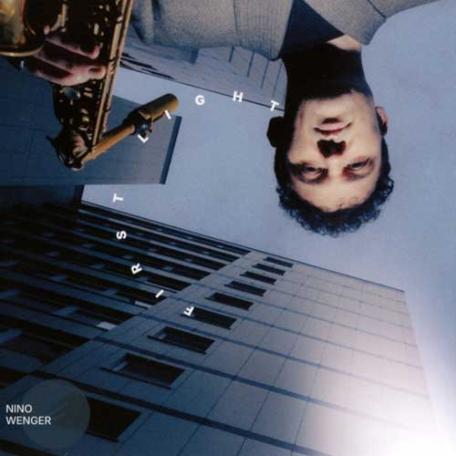
When Listening Becomes Movement. A year in New York can change many things. For saxophonist Nino Wenger, this period became a time of intense musical and personal development. First Light brings these experiences together without turning them into a diary. Instead, the album translates them into music that thrives on openness, tension and communication. Wenger's compositions clearly carry the energy of this period. Explosive passages, almost rock-like intensity and rhythmic drive stand alongside quiet, fragile moments. These contrasts never feel constructed, but rather like different states of the same musical movement. The quartet, featuring Fabio Gouvêa on guitar, Tabea Kind on double bass and Paulo Almeida on drums, finds a remarkably balanced musical language to express this. The guitar expands the acoustic sound with electronic and atmospheric colours, while the double bass keeps the music firmly rooted in the jazz tradition. The drums hold these two poles together while keeping them in motion. At the heart of the music, however, is not the instrumentation, but the way the musicians communicate with one another. Wenger does not see improvisation as a clearly defined moment in which one musician takes a solo while the others provide accompaniment. Roles are constantly shifting. An impulse from the drums can open up a new direction, the bass can suddenly take the melodic lead, and the guitar can create spaces into which the saxophone or flute can move. The result is music that feels attentive at every moment. You can hear how quickly these four musicians respond to one another and make decisions together. The pieces have clear compositional identities, yet remain open enough to develop anew with each performance. Wenger's alto saxophone never places itself above the ensemble. His playing becomes part of the collective musical narrative, capable of breaking out with energy or holding back considerably in quieter passages. The flute also broadens the sonic palette and enhances the transparency of the more restrained moments. First Light is modern, superbly recorded and produced with great clarity. The recording preserves the quartet's immediacy without smoothing over the many subtle sonic details. The album thrives on this combination of precision and spontaneity. It reveals a musician who has emerged from a formative period in his life not simply with stories to tell, but with a musical outlook of his own. Listening, responding, moving forward. And allowing music to emerge together.
Slo-Mo Neon Luminate Hoverings should be considered remarkable—a marvel destined for immortality when the time comes. As it stands, few combinations of improvising musicians possess such a degree of rapport and mastery, such an absence of ego, and such a profound commitment to collaborating on the construction of a large-scale artistic project as that offered by Ambrose Akinmusire and Mary Halvorson.

Two outstanding figures and individuals of the Polish music scene together in recordings studio. Polish Radio Archives have uncovered another treasure, never published, recently discovered in archives. It's worth outlining the temporal context in which these recordings were made. The year 1988. Stanisław Soyka has already released an album for RCA. His discography includes an Ellington album and a release in the prestigious Polish Jazz series. Tomasz Stańko has already released "Balladyna" under the ECM label, but regular recordings for the Munich label are still ahead of him. "Soyka / Stańko" consists of two suites from two recording sessions. The whole thing is instrumental in character, with minor exceptions in the form of two parts of "Medula oblangada" where Soyka also presents himself vocally [though by no means does he sing]. And it is precisely the image of Stanisław Soyka that emerges from these recordings that is the greatest surprise for the listener. After all, we know him primarily as a wonderful singer and songwriter. Here he is an instrumentalist. His characteristic piano playing, in the absence of the voice that usually accompanies it, gains particular power and distinctness. The whole is a foretaste – though fulfilled only years later and post factum – of the future greatness of both musicians. "Soyka / Stańko" is something more than just a curiosity. The record of this unexpected meeting is a true rarity, something fantastic and outstanding.
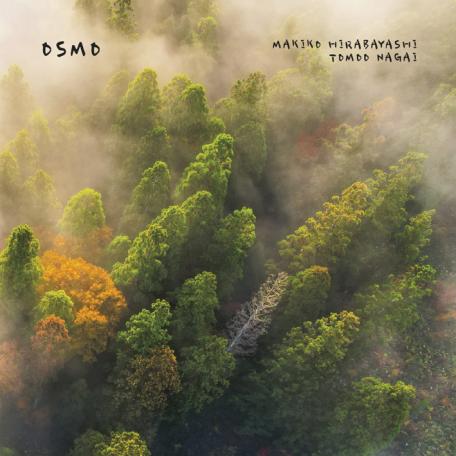
Makiko Hirabayashi is a Japanese pianist and composer who has been based in Copenhagen since 1990. She has garnered significant acclaim as a distinctive and individual voice on both the Danish and international jazz scenes since the release of her debut album as a leader in 2006. Tomoo Nagai is a Japanese percussionist, drummer, and composer, born in Shizuoka, Japan, in 1975. He explores improvisation—experimenting with various genres—creates his own original instruments, and frequently performs solo concerts. On this release, Hirabayashi truly demonstrates what an excellent pianist she is. Her playing is incredibly creative, yet her "past" as a more "straight-ahead" jazz pianist shines through beautifully. This combination makes her a real find for anyone who appreciates modern, creative piano playing. Coupled with Nagai’s highly creative and attentive drumming and percussion—into which he incorporates his Japanese influences—the result is a brilliant duo album.
With their amazing debut album *Mestizx*, the Amsterdam-based Puerto Rican couple Frank Rosaly and Ibelisse Guardia Ferragutti made a grand entrance into the free world of jazz. With the EP *O*, they return after more than two years with a follow-up that’s just as exciting. As part of the rich international musical family of the International Anthem record label, we’ve seen both musicians perform at various other venues over the past few years, and those additional live experiences have contributed to what the six-track EP *O* now has to offer. Musically, *O* goes a good deal further than the already thrilling *Mextixz*. Rosaly has since become a much-sought-after drummer, who also continually launches new projects of her own (such as recently with guitarist Jeff Parker, among others). The same goes for Ferragutti, whose ever-surprising keyboard playing constantly pushes the timbre in new directions.
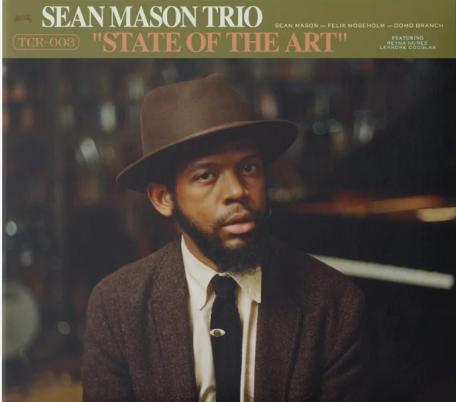
Sean Mason looks a bit like Thelonious Monk, sounds a bit like Ramsey Lewis, delves a bit like Ahmad Jamal. With Felix Moseholm on bass and Domo Branch on drums, he is Sean Mason more than 100%. Tradition and creativity, riffs and syncopation, funk and stride in the year 2026 is something more than genuine; it is Jazz As We Know It and a wholehearted groove.
Mário Barreiros, a veteran drummer, composer and one of the most influential producers in Portuguese music, has played a significant role in shaping the country’s musical landscape. As a performer, he was involved in pioneering groups and projects. With Na Pele da Terra, recorded live, Barreiros takes another step forward, presenting a quartet that brings together Ricardo Toscano on alto saxophone, Carlos Barretto on double bass and Leonardo Pinto on electronics and real-time sound processing. Conceived as an ecological manifesto, the album reflects on the fragility of the planet’s ecosystems through four pieces, including a rendition of Coltrane’s “Naima”. The addition of electronics opens up new atmospheric dimensions, expanding the trio’s jazz foundations into a broader sonic landscape where composition, improvisation and real-time processing interact with subtlety. Toscano is particularly compelling, his playing displaying an expansive, open and imaginative quality that captures the intensity and freedom of his live performances.

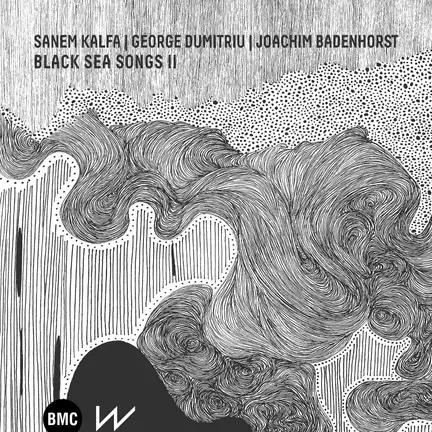
The music of this album is dangerous, dangerously deep, dangerously effortless, dangerously unadorned, dangerously poetic, dangerously close, dangerously intimate, dangerously remote, dangerously pure, dangerously mysterious, dangerously different, dangerously … Because? Because it takes its listeners with high immediacy into a momentaneousity and otherworldliness of up close experienceable poetical sensitivities. It is not poetry set on music, it is poetry itself, where written poetry finds a fitting home. The three musicians, Sanem Kalfa originating from Trabzon at the Black Sea, vocals and cello, George Dumitriu, originating from Bucarest, guitar and viola, Joachim Badenhorst, originating from Antwerp, (bass)clarinet, play and express what they feel musically highly direct and find each other blindly through organic gestures in a natural flow. Yes, and there are electronics (by Dumitriu and Kalfa), very musical, subtle organical electronics. It is radical music. Radical in spirit, radical in expressive courage, radical in meeting moods, radical in the opening of and surrender to the gates of sensibility. In this process they reach a state where the music ‘plays itself’ and flows from within - a state capable of profoundly touching its listeners as partners in crime provided they are willing to engage so. There is singing and singing. Here singing comes from an extraordinary human voice magically melting together with the instrumental voices.
UKJN's reviewer Mike Collins drew our attention to this unusual album from Cardiff-based guitarist James Chadwick, which takes a fresh look at sixties pop tunes, notably some Beatles classics. "Nothing arrives quite as might be expected in this set, but it’s always in a pleasing package.... This is a quietly compelling album which is well worth seeking out," wrote Mike Collins in his review.

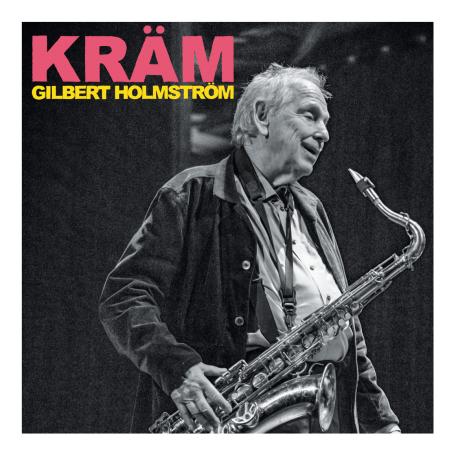
Swedish tenorsaxikon Gilbert Holmström just turned 89, and is still going strong. His debut album Utan Misstankar from 1965 is considered to be one of the most classic albums from the Scandinavian scene. He has ever since inspired and continued to work with younger musicians on the scene, starting with his band Mount Everest, and continuing with the work together with Mathias Landaeus, Kresten Osgood, Mats Gustafsson, Jonas Kullhammar. Gilbert and Mathias has collaborated since 2012, and on this album you hear Gilbert together with Landaeus trio consisting of bass player Johnny Åman, and drummer Cornelia Nilsson. The quintet became complete in 2023 when the Norwegian trumpet player Erik Kimestad joined the band. All compositions are originals by Gilbert, except for Sleep Safe and Warm by Krzystof Komeda.