Media chart
Europe Jazz Media Chart - October 2026
A selection of the hot new music surfacing across the continent this month by the top European jazz magazines and websites.
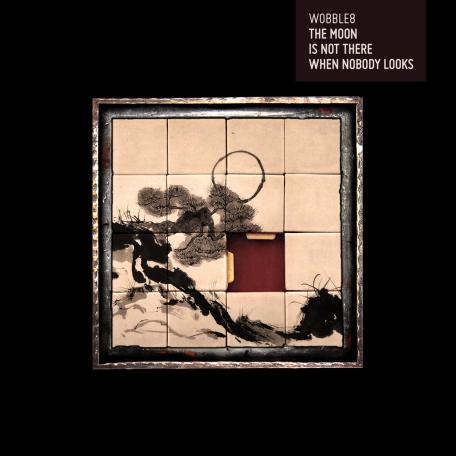
The Berlin quartet led by drummer Valentin Schuster presents a little gem of energy and form. Five tight, dynamic tracks—contrasting and condensed—that blow you away. Only one rule appears to guide this little world: creating music that defies categorization. Alongside Sofia Salvo on baritone saxophone, Sebastian Pfeifer on synths, and the great Dan Peter Sundland on bass and vocals, the drummer has assembled a group of fearless, uncompromising musicians who know how to forge the metal. And even when they seem to be lost among all their sparkling ideas, there’s always a way out.
Tolstoy is as turbulent and thought-provoking as it is fascinating. (Jacques Prouvost)
Too Noisy Fish confirm, with Tolstoy, just what a mind-blowing trio they are – an intriguing and refreshingly contemporary act. (Bernard Lefèvre)
Trio Elpo (Trio Breathe) is a group of experienced musicians from the mid-generation of the Latvian jazz scene. Although they are marking their tenth anniversary, Aquarium of Sound is their debut album. Numerous concerts in Latvia and abroad have helped hone their collective sound, and that is exactly how the LP comes across—as a refined collaboration where the tracks glide like unhurried fish in an aquarium, creating a sense of tranquility. The material consists entirely of original compositions by the trio’s pianist, Edgars Cīrulis, and double bassist, Jānis Rubiks – with the exception of an arrangement of the Prelude in F Major by the Lithuanian classical composer M. K. Čiurlionis. Drummer Rūdolfs Dankfelds’ sensitive responsiveness to the piano and bass lines is also a vital component of the trio’s sound. It is an excellent record to spin on your turntable during October evenings.
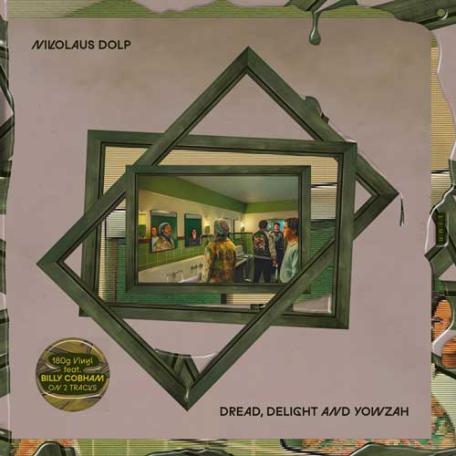
Between Dread, Delight and a Sense of Wonder. What does music sound like when fear of what lies ahead, joy in the present moment and a sense of wonder at the unexpected all come together? With Dread, Delight and Yowzah, Nikolaus Dolp offers an answer that is as unusual as it is overwhelming. The drummer and composer, known for more than a decade as the rhythmic driving force behind Shake Stew, steps forward under his own name for the first time – and immediately presents a work of remarkable scope. At its core is his quartet with Richard Koch (trumpet), Stephanie Weninger (piano and keyboards) and Raphael Preuschl (bass). But it does not stop there. Around 20 musicians are involved in the project, with legendary drummer Billy Cobham as its most prominent guest. Together, they create a sonic universe that combines jazz, funk and the electric energy of 1970s fusion with orchestral elements, without allowing itself to be confined to any of these categories. The title also provides the album’s emotional blueprint. “Dread” stands for the fear of what might come. “Delight” describes the joy of the present moment. And “Yowzah”? That is the spontaneous sense of amazement when something suddenly happens that no one expected. This is precisely what gives the music its vitality. It can become immense, change direction in the very next moment and transform a seemingly familiar structure into something entirely unexpected. Rhythmic energy is ever-present, yet as a composer Dolp thinks far beyond the role of a drummer. Timbre, orchestral layering and electronic elements are every bit as important as groove and improvisational freedom. With an ensemble of this size, it would be easy to confuse musical grandeur with sheer sonic mass. Dolp, however, takes a different approach. The multitude of voices serves a shared dramatic arc. Shifting instrumentation, surprising contrasts and a wide range of musical influences combine to create an almost cinematic form of storytelling. The fact that Billy Cobham, one of the defining drummers in the history of fusion, was drawn to Dolp’s ideas seems almost inevitable. This is not a meeting of generations driven by nostalgia, but one rooted in a shared appetite for risk and for pushing beyond musical boundaries. Dread, Delight and Yowzah is Dolp’s most comprehensive statement to date as a drummer, composer and producer. Above all, however, it is music that proves remarkably difficult to compare with anything we already know. It is dynamic, uncompromising, surprising and full of imagination. Perhaps we really have never heard anything quite like it before. And that is precisely why, in the end, only one thing remains to be said: Yowzah!
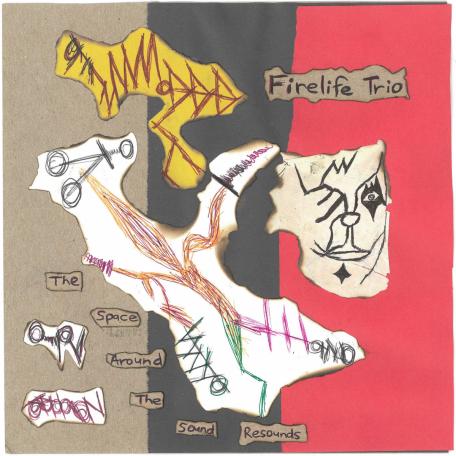
Firelife Trio: Danny Kamins- Soprano and Alto Saxophones, Aaron Gonzalez- Double Bass and Stefan Gonzalez- Drums, Percussion. The Space Around the Sound Resounds by Firelife Trio is an ambitious, live-recorded and supremely fiery testament to the power of instantaneous creation. Documented at the Ochre House Theater in Dallas, TX, the record strips away all of the fail-safes of studio polish, pre-composed themes or contingency plans. What remains is a visceral and demanding exploration of space and tension that asks for total presence from both the performers and the listener.
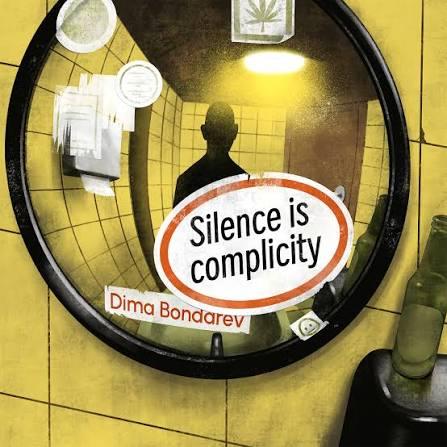
Dima Bondarev, the Ukrainian trumpeter, is an outstanding example of the observer. Throughout all the albums he recorded — starting with surprisingly mainstream collaborations with Nina Rotner, Giovanni Perin, or Rathaus Ramblers to more radical forms of the Focusyear 2022 recordings and solo albums — Bondarev seems to successfully soak in every sound he had heard, with ears open wide and curiosity, which are one of the greatest qualities the modern improviser can have. After two albums under his name — the debut I’m Wondering and the German Jazz Prize 2025 winner Get a Second Wind — Bondarev goes deeper into counterpoint and the deeper research on decomposition, with the new album Silence Is Complicity, released on the Dnipro & Kruchi label. After successfully exploring an Ornette-like quartet setting, with no chordal instrument, he reunites with his long-time companion Igor Osypov, who gives here a selective post-rock punch, and Jim Black being the playful rhythmical deconstructor, who also appeared on Get a Second Wind. There is just trumpet, guitar, and drums — a setup full of space for unpredictable instant composition. Osypov and Black have developed the kind of chemistry in which each seems to anticipate where the other is about to go. There is a notable contrast audible in the sharper tunes like “Temporarily Defocused” or “Noname”, where Bondarev appears with his firmness, centered tone and almost classical instrument control, that balances other’s prone to deconstruct the rhythm and play the tune forever. Many reviewers would inevitably compare Bondarev's sound to Ambrose Akinmusire — and from the perspective of articulation, the comparison makes sense. After all, you cannot spend a year studying with someone in Basel without absorbing something. Yet Bondarev's core remains distinctly his own: architecturally controlled, clean, and remarkably resistant to overplaying. Besides, whatever happens, Bondarev will give you the symbolical sense of hope in the particular way, by landing into anthem-like melody out of the improv or proposing an outstanding grunge tune right after the ballad in duo with guitar full of sweetly altered dominants. Another notable part is how musicians use effects/electronics — both as a shifter, like in “Count on Yourself”, and the link with fragility in more textural tunes like “Labadee”, “Peppy’s Lullaby”, or “Dialogue With Rising Sun”. An outstanding ground for Bondarev to delve into interval playing and mourning imitations. Sometimes it is the same effect, which was treated adequately to what is heard, that just proves the truth about minimal tools that encourage to be creative. What we have learnt — or rather, reminded ourselves of — through this album is how important is to rely on your ear and instinct. That is the way to sound like yourself, which might be paradoxically difficult. Dima Bondarev fascinates with his wisdom and proof of the importance of dissonance. His music gives you room to look at your life from a certain distance — that rare moment in the day when listening becomes a form of reflection. And perhaps, it is a reminder to look after the people you feel yourself with, because through trust and years of contact, Bondarev, Osypov, and Black, managed to create a sincere masterpiece.
I don't often write a comment on my chart selections, usually hoping the music does the talking, however I just want to flag up that this duo album is really exceptional, Linda and Melissa are slightly ubiquitous these days popping up as star guests or as high calibre members of different projects, however, I think they both deserve serious plaudits as two incredibly talented instrumentalists. Linda's bass work on this album is nothing short of astonishing, she is precise and yet warm, rhythmically intense and also harmonically adventurous. Melissa is one of the finest rising sax players on the planet, and hopefully in the next few years she will have a real breakthrough album, her playing here really hits new highs. I also love the fact that they've taken quite traditional repertoire and really given it a nice modern punch. A really outstanding duo album.

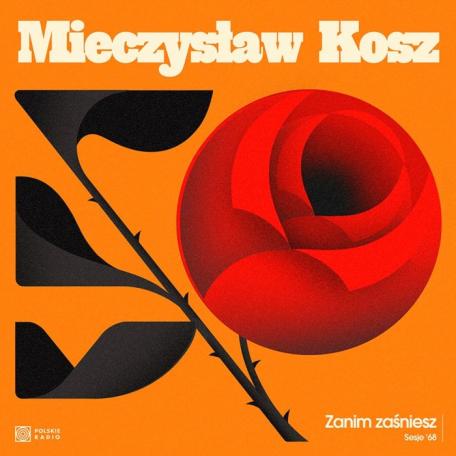
Yet another portion of treasurers discovered in the vaults of Polish Radio after more than a half century. Zanim zaśniesz (Before you fall asleep) is a mini-compilation of six ballads recorded in 1968 by the legendary pianist Mieczysław Kosz as a session musician. On three of these ballads he is featured with Studio M-2 string orchestra directed by Jan Ptaszyn Wróblewski, and on three others, including “Autumn Leaves” – with the quartet of the Polish-Lithuatnian saxophonist Remigiusz Filipowicz. The archival series comprises, all in all, five albums: Debiut. Jazz Jamboree ‘67/’68, Sygnały. Trio ’68, Collage. Quartet ’68, Ikar. Solo na Jazz Jamboree, and this final one – Zanim zaśniesz. Sesje ’68. These recordings arrived as a sensational suplement to his one and only album as a leader released during his lifetime – Renaissance (1971). All five volumes are now available individually as well as a complete 5-CD box. Mieczysław Kosz was one of the most promising Polish jazz pianists of the late 60s/early 70s, next to Adam Makowicz and Włodzimierz Nahorny. Blind by the age of 12, he developed a style that was an extension of Bill Evans with a touch of Polish romanticism. His career was cut suddenly by his tragic death in 1973 at the age of 29.
Interpreting Fryderyk Chopin's music has a long-standing tradition in Polish jazz. And in the case of the RGG trio, it is always worth checking where the musicians' inspirations have led them. After such creative artists, one can expect that they will reliably find foundations to build a fascinating story on – literally – anything that interests them. I found a hint regarding the approach the trio adopted in interpreting Chopin in the statements of the musicians themselves. RGG decided to filter the compositions through their own sensibility. To create a personal vision of what was written in the notes by the composer. On the one hand, we are not dealing here with a decomposition of the source material. On the other hand, the characteristic style of RGG has not been lost either. In this trio there is no dominant instrument, even when music so unequivocally associated with the piano is being presented. The percussion and double bass are not limited merely to being a rhythm section. Each member of the trio can go far beyond the stereotypical role of their instrument here. The percussion expands the space of the music. The piano paints a background for the double bass solo stating the Chopin motif. This album combines history and contemporaneity, tradition and modernity, classical and innovation. The trio has once again succeeded in creating something exceptional.
The swedish saxophone player, Elin Forkelid, is the perfect successor to “the Master”, John Coltrane, and I am convinced that—while Forkelid performs these tunes—he pauses his "jam session in heaven" to listen to every note the she plays. And with such solid backing from fellow musicians, David Stackenäs (guitar), Mathias Ståhl (vibraphone, soprano saxophone), Vilhelm Bromander (doubble bass, soprano saxophone), Jon Fält (drums) —who consistently provide excellent support for Forkelid’s playing, helping to make this an outstanding release from the top tier of Swedish jazz and a worthy tribute to "the Master"—it is, from start to finish. A great record!
It’s clear that the Real World studios in Bath, England, provide quite a bit of inspiration. Too many recordings from that place are world-famous. British jazz legend/pianist John Donaldson also went there to record his new album, and with the now-released 'We Were Together, I Forgot The Rest,' it’s clear that Donaldson felt completely at home there. It’s no wonder that the inspiration flowed so freely when you have musicians like guitarist Rob Luft, bassist Tom Mason, drummer Jeff Ballard, singers Norma Winstone and Rebecca Edlund, saxophonist Iain Ballamy, and trumpeter Graeme Flowers around. That is, without a doubt, the cream of British jazz, and honestly, you can really hear it in the music.
This young dynamic piano trio from Greece is astonishingly original as well as straight ahead in their approach to jazz. Except three standards, all compositions are composed by the group leader bassist Yiorgos Pantazopoulos. Pantazopoulos is a musician of deep feelings reminding the listener both Mingus and Haden. Pianist Alexandros Lykothanasis takes his cues from Bill Evans and creates something out of ordinary (and out of blue). And drummer Panagiotis Themas sets the pace and covers it with a percussive lace. These brilliant musicians studied in the Ionian University in Corfu and it seems that they got inspired by the unique character and beauty of the island.

Spirits Moving is the new work by the quartet led by trumpeter Luís Vicente, featuring saxophonist John Dikeman, bassist Luke Stewart and drummer Onno Govaert. The group returns to the Igreja do Espírito Santo in Caldas da Rainha, Portugal, for an album that celebrates the joy of playing together and pays tribute to the spirits of the past.

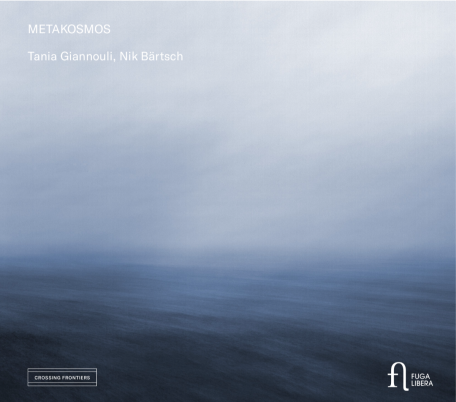
In the field of free improvisation you can find a lot of international combinations in groups. In other fields it is less common. The pianists Tania Giannouli and Nik Bärtsch, an evenly matched duo of kindred musical spirits, found each other across a significant geographical distance - a truly European duo with Athens, Greece and Zürich, Switzerland as home bases. The art of the duo… yet it is actually a trio, because … because the two pianists—the four hands—play with space(s), conjuring magic of spaces. The perception of sound and space is mutually dependent and these two musicians create remarkable sophisticated and natural interactions of this close relation. Behind each space (an)other space(s) open(s) up for the listener through a masterful timing and subtle as precise interlocking of their initiating, supporting, emphasizing or deepening piano sound moves. The album’s music is also high level art of the ostinato. And there is more, e.g. the masterful shifting between foregrounding and background as well as the interplay of low and high register with at the right moment break through of voicings in the middle register (if Gil Evans would hear it, he would smile). And then there are the bass sounds and the bass function that evoke real magic in this context. You hear a kind of minimalism that constantly alludes and opens up to rich melodic realms and is enriched by precious percussion by inside the piano action. When listening to the music you will notice that Giannouli and Bärtsch do - not intentionally - purely acoustically what others do with complexifying electronic looping and sampling. But … but in my ears the purely acoustic dynamics here are more flexible, faster and more coherently (stimmiger) interlocking. The themes and motifs you hear on the album, seem highly evident. As if they were there for the taking and had been wandering through the cosmos (and our souls) for a long time … whereby they become something powerful for the listeners—something in which they can recognize and identify themselves. The eight pieces between 4,5 and 13 minutes are collaborative live improvised elaborations of earlier pieces by both musicians. e.g. “Door 13/Pink Athens” is an extension of Bärtsch’s “Modul 13” and “Electric Sea” is from Giannouli’s “Grey Blue” from her Solo-Album. Release concert of Metakosmos on October 24th in Ludwigshafen at Enjoy Jazz Festival.
The Jon Lloyd Quartet is Jon on tenor and soprano saxophones, John Law on piano, Nick Pini on double bass and Alex Goodyear on drums. Anima is their second album and is an album that follows the approach adopted in their previous album Earth Works (Ubuntu). label. The music has an affinity with that of the Tord Gustavsen Quartet in its focus on clear attractive themes and very close interaction.

Bugge Wesseltoft, Dan Berglund and Magnus Öström – return with their fourth studio album, Today May Be Tomorrow. As on their previous excursions, RYMDEN blends the jazz harmonies tastefully with art music, minimalism, film scores, and progressive rock. The songs often begin in a contemplative mood—set against a backdrop of Scandinavian folk influences—before expanding and ultimately resolving into a soulful melancholy. The music shifts between atmospheric, cinematic passages and more powerful, elastic bursts of energy. The title suggests uncertainty, transition, and the strange elasticity of the present moment; today may already contain tomorrow, while yesterday may return in altered form.
Martin Nodeland (g), Alexander Hoholm (b), Raymond Storaunet Lavik (d), Arne Martin Nybo (g & eff), Martin Sandvik Gjerde (p), Rastko Obradovic (s), Simen Kiil Halvorsen (tp), Iris Maidre-Aarvik (vla), Hanna Nicoline Moland, Jørgen Krøger Mathisen (vln), Vilde Alme (cel). Recorded in 2020. Complex music full of contrasts, featuring teeming, angular themes played—for instance—in unison by electric guitar and saxophone. Rhythmically, one notices the assured yet at times elastic meter. Dynamically, the music ranges from the blistering to the contemplative. The tension between the extroverted and the introverted is handled sublimely. Norwegian Martin Nodeland (b. 1993) is a modern guitarist and composer in the vein of Kurt Rosenwinkel and John McLaughlin. His technique is exquisite, and his musical figures are executed with confidence. The other musicians contribute to the high level and help establish a Nordic identity—for instance, with a "dusty"-sounding trumpet and string arrangements inspired by 20th-century classical composers. Several musicians are granted space to solo, and all of them perform impressively. Martin Nodeland’s releases called TRIBUTARIES and DEBUT are also well worth checking out; indeed, Smeik is a record label that has made its mark in just a few years with a string of high-profile releases.