Media chart
Europe Jazz Media Chart -- May 2026
A selection of the hot new music surfacing across the continent this month by the top European jazz magazines and websites.
Latvian jazz vinyl label Jersika Records has released a collaboration between Lithuanian free jazz saxophonist Liudas Mockūnas and his genre colleagues – Swiss trombonist Samuel Blaser and French guitarist Marc Ducret. The live recording, made at Riga Recording Studio, was recorded on tape without any editing or overdubbing. The international trio draws influence from the work of the legendary American saxophonist Jimmy Giuffre’s trio, creating their own avant-garde compositions and freely expanding the boundaries and techniques of the saxophone, trombone and guitar. This is one of those free improvisation programs that is very good for listening on record without live attendance and will be a good addition to the collection of every free jazz fan. All three can be considered true masters of the genre, for whom there are no concepts – either it’s not right to do that or someone might not understand it. In addition, Liudas has long proven that such a rare instrument as the bass saxophone can also be used perfectly in this music.
With The Match, two exceptional musical personalities meet in a remarkably intimate way: the German singer and pianist Johanna Borchert and the Canadian bassist, vocalist, and sound researcher Miles Perkin. Together, they create a musical terrain that moves between jazz, contemporary improvisation, and experimental sound art. The concept of the album is based on an idea of encounter: two instrumentalists, two voices, two musical worlds that reflect and permeate one another. Although both artists come from the traditions of jazz and free improvisation, they expand their instruments through preparations and extended techniques. This results in a sonic vocabulary that feels familiar and yet entirely new. Piano, bass, and voice merge into a soundscape in which different musical layers overlap. Abstract textures stand alongside simple song structures; calm sonic surfaces alternate with sudden rhythmic outbursts. Between these poles, a music unfolds that resists any clear categorization. Particularly fascinating is the way the two artists handle the voice. Borchert and Perkin use it not only as a carrier of text or melody, but as an independent instrument. Their articulation, breath control, and subtle dynamic nuances sometimes allow their voices to merge into one. This vocal interaction is among the most striking moments of the album. The two voices circle around each other, pick up motifs, develop them, and eventually unite into a shared sonic line. It is less about virtuoso technique than about musical imagination and a deep mutual understanding. Despite its experimental approaches, The Match never feels artificial or constructed. The music flows with remarkable naturalness, as if it were shaping itself in the very moment of its creation. The result is an album that feels both mysterious and immediate—a sound world that appears familiar while continually opening up new perspectives. A fascinating duo project, best experienced without interruption to fully unfold its effect.
Álvaro Torres, piano, Masa Kamaguchi, bass and Kresten Osgood, drums. Of particular note was the energetic exchange between pianist Álvaro Torres's trio, featuring Masa Kamaguchi on double bass and Kresten Osgood on drums. From that evening, a handful of compositions, very close to improvisational flair, are preserved in Mairena.
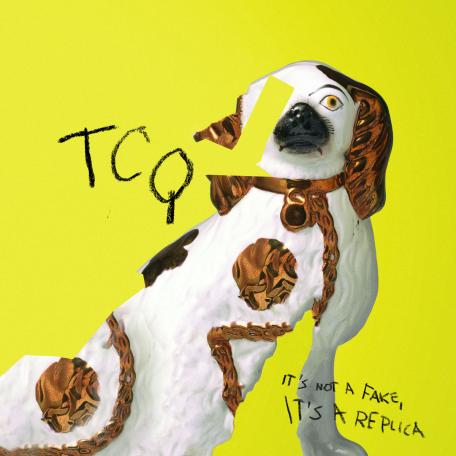
Tomasz Chyła Quintet, hiding here behind the acronym TCQ, surprises listeners with a new formula for their music, moving toward heavy, rock-inspired sounds. However, it must be said that this is a thoroughly positive surprise. This album emphasizes collectivity. And the spotlight most often falls not on the titular leader, but on guitarist Krzysztof Hadrych — brilliant in his solo parts, but also exceptional at creating the backdrop for the rest of the ensemble. Each instrument perfectly fulfills its role. And the finale is a brilliant summation of the album: surprises in a different way, revealing the quintet's side closest to a strictly jazz idiom. This is a kind of cliffhanger, after which we can be sure of only one thing: on the next album, anything can happen.
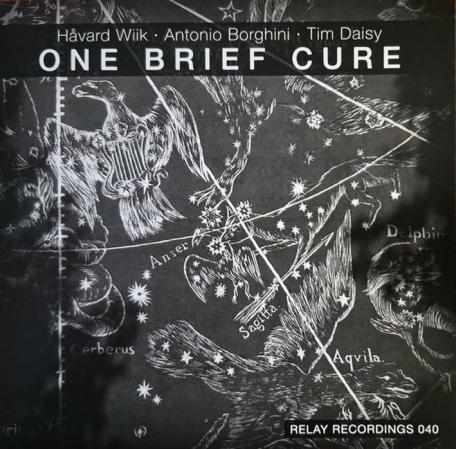
I am convinced that this is some of the toughest, most intense, driving and most energetic music you have ever heard from pianist Håvard Wiik. And Antonio Borghini's bass playing is consistently listening and pushing, as only the best of the breed can do. And Tim Daisy's drumming is behind it as a solid support player and whip. Together, the three of them have created a release that will take a lot to surpass for a long, long time! My absolute favorite so far in 2026!
What a delightful surprise Ladeiras de Santa Teresa is—the first collaborative album by drummer/trombonist Antonio Neves and percussionist/drummer Thiaguinho Silva. New Brazilian jazz at its best. Ladeiras de Santa Teresa can be called the first album in which two Brazilian drummers call the shots and set the musical course. And from the opening notes of “Das Neves,” it’s clear that those rhythms are prominent, but the musicians around them sound just as vibrant over them. What else would you expect when playing with a pianist like Luiz Octavio and a double bassist like Guto Wirtti, and your father—in this case, Antonio’s—forms the horn section alongside you?

The cornetist, vocalist, composer Kirk Knuffe creates a beating, singing and swinging atmosphere with Stomu Takeishi on bass and veteran Bill Goodwin on drums. The songs with vocals remind us of the Mose Allison canon.
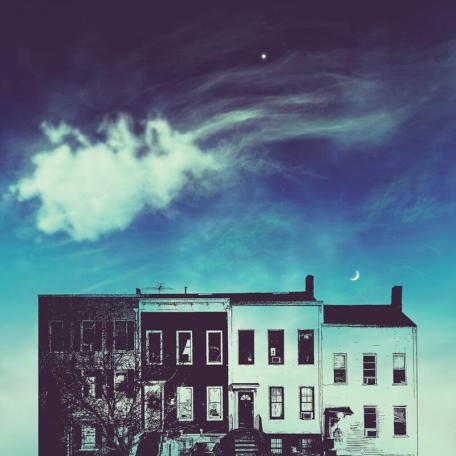
Tenor saxophonist, composer, and improviser Fábio de Almeida was born in Paris, grew up between Vila Real and Porto (Portugal), and currently lives in Tilburg, in the Netherlands. In his debut recording, he asserts a singular instrumental voice in an album marked by a rich palette of sonic colors. The lineup is immediately unconventional: Sjoerd van Eijk on synthesizers and keyboards, Stef Joosten on electric bass, and Pedro Nobre on drums. The compositions, with clearly defined lines yet open spaces for improvisation, are equally distinctive; rather than following the conventions of “American jazz,” they point in other directions, incorporating diverse elements—from classical to electronic, crossing different musical geographies—to create a truly unique sonic universe.

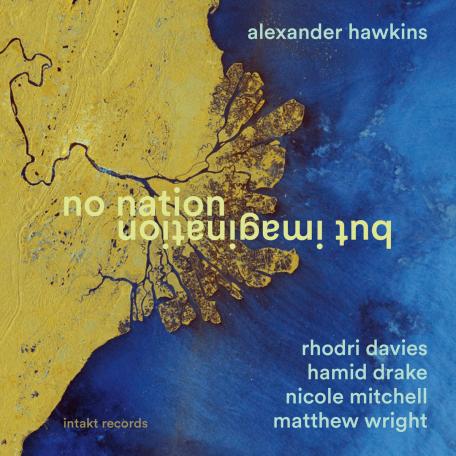
This new album of omnipresent Oxford musician Alexander Hawkins with its sharply shaped title holds quite some challenges for listening and food for reflection and taking positioning. It contradicts the widespread PR rhetoric that gives the impression that musicians primarily work with anything that is readily available for mixing. That is an extremely distorted image of the artistic creative process leading from the given status quo to new frontiers. It is not only a question of finding an itinerary but also a question of but also a question of dissolving existing concepts, immersing oneself in … yes what … . it seems the currents and flows of a large river … from which new things emerge, arise, spring forth. Its this process AND some of its results that both manifests here and became apparent to me upon first listening to the album. What you hear is not only ‘new’ music bit a a new way, a new floating form to get into it as an experience beyond a lot of known. I'll leave it at that. The listening flow will evoke a lot more for everybody.
UKJN's reviewer Jon Turney writes: " There’s a freedom of line and form here that produces results that are a cut above most jazz vocal offerings. This collaboration between vocalist Sylvie Noble and bassist Ursula Harrison surely promises much more than we enjoy here, but this is a calling card of rare quality."
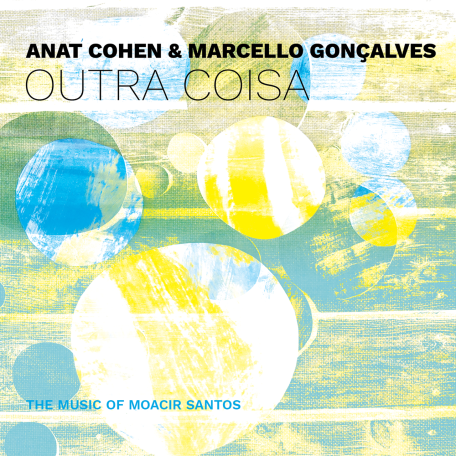
Moacir Santos (1926-2006) was a multi-instrumentalist, composer, teacher and a Brazilian celebrity. He successfully fused jazz with music from Africa and South America. The Brazilian guitarist Marcello Gonçalves conceived this album and distilled the extensive arrangements of Santos’ music. Marcello Gonçalves has been acquainted for several years with Israeli Anat Cohen, who lives in New York. Both of them play with exquisite rhythmic surplus, a richness of tone and a vibrant twirling energy. There is a lot going on in Santos’ compositions but Gonçalves and Cohen pull it off with ease. Anat Cohen: clarinet. Marcello Gonçalves: seven-string acoustic guitar.
The aim here is to celebrate the famous Franco-German “couple” which, for over 50 years, has been the driving force behind Europe and our music. There is no better way to evoke this than by gently revisiting, with the lovely, familiar timbre of Erdmann’s tenor, Barbara’s song “Göttingen,” which says it all about this friendship; Over Klesse’s highly colorful drumming—who shares his quartet with Robert Lucaciu—the various protagonists take turns like a rondo with multiple voices, where Hélène Duret’s timbre and Ceccaldi’s violin blend beautifully. There is a great deal of tranquility on this album, which builds bridges between the two countries throughout… But that’s not all: “Musskatnuss Herr Müller” and the tutti passages orchestrated by Lucaciu, which generate a collective energy, remind us that a driving force is meant to create movement. This album celebrates the symbol of a lasting relationship, with the bounding cheerfulness of “Eva in Paris,” which Courtois and Duret build with great breadth over Klesse’s highly creative drumming, where we gracefully cross from one border to another, until they are completely abolished. (Franpi Barriaux)

Why ? There’s no doubt about it: Ola Tunji are a band to watch out for in the future. Don’t miss them!

A total of nine miniatures, each with a story behind it. For those who dare to pause and reflect on their own past and interests. Fans of the Norwegian Hubro label know what to do. (Georges Tonla Briquet)