Media chart
Europe Jazz Media Chart -- April 2026

A selection of the hot new music surfacing across the continent this month by the top European jazz magazines and websites.
Solo albums by drummers are always a particularly unusual event in the world of jazz and related genres. Quite commonly, it is also a genre mix with a tendency towards rhythm. The debut album Rincore by Latvian jazz drummer Rinalds Maksimovs is no exception, in which acoustic percussion instruments are intertwined in one vortex with electronic music gadgets. One of the most active Latvian producers, Gatis Zaķis, also helped to tame them in the studio. The result is a recording that is both rhythmically saturated and takes listener into different spheres of sound perception. It’s unabashedly experimental, full of surprises and still considered part of the world of jazz improvisation. Rinalds has already introduced the compositions heard on the album to concert audiences in the Baltic States, Sweden, Belgium, the Netherlands, and the UK. In May, this recording will be released in vinyl format as well.
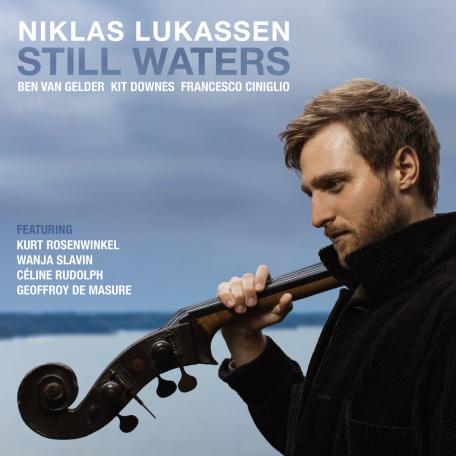
The internationally assembled quartet of bassist and composer Niklas Lukassen brings together distinctive voices from the European scene: alto saxophonist Ben Van Gelder, pianist Kit Downes and drummer Francesco Ciniglio. On Still Waters, released by Heartcore Records, the ensemble is expanded by guests such as Kurt Rosenwinkel, Céline Rudolph, Wanja Slavin and Geoffroy De Masure. The album title Still Waters refers to an aesthetic approach that combines restraint with inner movement. Beneath the apparent calm, nuanced arcs of tension and deep sonic layers unfold. Lukassen appears not only as a bassist, but also as a performer on electric bass and his own hybrid instrument, the “basscello”. This sonic versatility significantly shapes the foundation of the compositions. The pieces are deliberately open in structure, offering the musicians space for individual interpretation. However, the improvisational freedom is always framed by clear formal structures. The interplay is defined by a refined sense of balance. Each musical contribution expands the compositional concept without undermining its internal logic. The synergy between the individual musical personalities creates an organic development of the themes. Particularly striking is the album’s lyrical quality. Lukassen’s compositional approach combines melodic sensitivity with harmonic sophistication. The guest musicians add further tonal nuances, enriching the overall sound. Despite the number of contributors, the album remains cohesive and focused. Still Waters documents Lukassen’s artistic maturity and his strong sense of ensemble direction. It stands as a representative example of contemporary European jazz that productively brings together individuality and collective sound design.
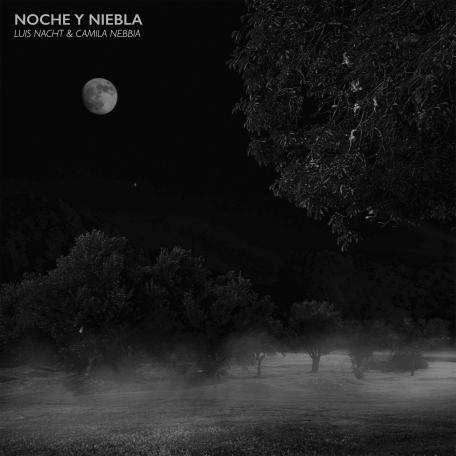
Luis Nacht – Tenor and soprano saxophone, Camila Nebbia – Tenor saxophone, Jerónimo Carmona – Double bass and Fermín Merlo – Drums. More than a one-off collaboration, Noche y Niebla is the culmination of a deep musical understanding built over time. The creative dialogue between Nacht and Nebbia has flourished on stage for over a decade, resulting in a work that brings improvisation to a profound conceptual level. The album’s title reflects the tension between the darkness of intuition and the indeterminacy of form—two forces that permeate the entire work.
Here is an unassuming and intriguing album by the young Polish vocalist Ola Błachno with roots in the jazz scenes of Warsaw and Berlin. The titles of her compositions are the names of the train and metro stations in both cities (in no particular order): Nowy Świat – Uniwersytet; Zoo; Rondo ONZ; Tiergarten; Warschauer Strasse; Hauptbahnhof; Alexanderplatz; Warszawa Centralna; Praga; Warschauer Strasse. The singer is supported by an international jazz trio and a string quartet. The music is an original blend of three different genres: jazz, classical and so-called industrial music. The essence of the project is best described in the liner notes: Warschauer Strasse is a musical story whose journey becomes a pretext for reflection, renaissance, and finding one’s own inner freedom. Synonyms for freedom include train and metro stations, the motif of journey, and two cities of freedom… The locomotive for the entire album is jazz with its improvisation at heart. I can appreciate this music as I had a good luck to share with Ola a Warsaw metro ride from Rondo ONZ to our common destination.

Recorded with the participation of pianist Leo Genovese and saxophonist Ingrid Laubrock, Willy Rodriguez’s latest album draws inspiration from the artist’s experience of a personal and profound loss. Sometimes, in a work of art, we find echoes of our own experiences. And it is precisely then that we can appreciate the depth and truthfulness of the artistic creation. This is one such case. And Willy Rodriguez’s album struck me as an almost perfect reflection of the experiences being described. In nearly every detail, from the track titles to the musical narrative. The musical partners of the nominal leader have excelled in conveying these transitions, at times taking complete command of the story being told. The album is beautiful and deeply moving. It is filled with subtleties, not only in its emotional layer but also in its purely musical one.

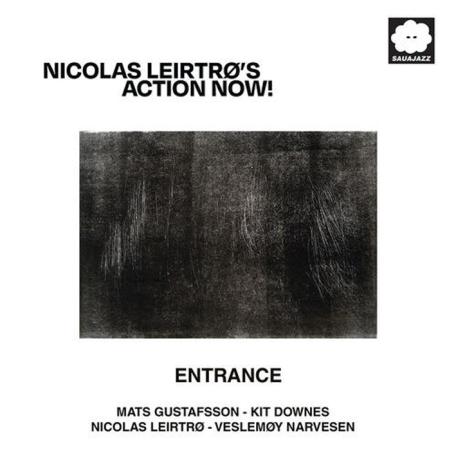
Nicolas Leirtrø is a bassist I have been following for a few years with great pleasure in bands like I Like To Sleep, Amalie Dahl’s Dafnie and Trondheim Jazz Orchestra. And the fact that he has been given the opportunity to put this quartet, with the saxophone player Mats Gustafsson, the piano- and organ player Kit Downes and drummer Veslemøy Narvesen, and put it out on record should, in short time, make them as one of the hottest bands around. Not since The Thing's golden age and some of Mats Gustafsson's other projects have I heard more vital and energic music within the groovy and free-spirited landscape. Really an experience from start to finish!
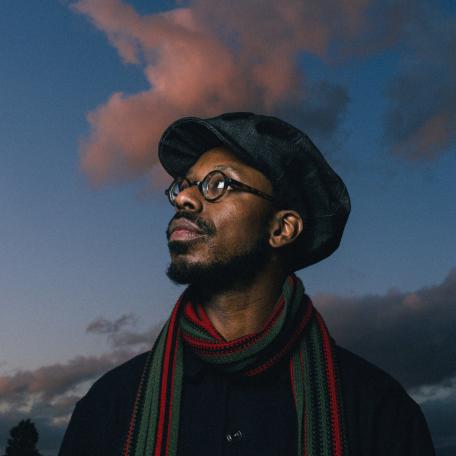
With the solo-recorded Of The Earth, Shabaka (Hutchings) once again comes with an album in which he musically takes a different turn. An album from which the musical adventure radiates and that sounds as inspiring as it is intriguing. Music as a journey of life. It was logical that he was completely fed up, even briefly, with the hectic pace of his so successful bands Sons of Kemet, The Comet is Coming, and Shabaka and the Ancestors. And also that he was completely done with playing the saxophone for a while. The EP Amerikan Culture and the sublime album Perceive Its Beauty, Acknowledge Its Grace, on which he only played the flute, were his wonderfully beautiful response to that. The concerts that followed were a revelation with music that found a depth we had not previously heard so prominently and discreetly from him. The series of follow-up concerts, often with only pianist and electronics wizard Elliot Galvin, surprisingly often delved deep into electronics. The performances (like the one at Middelheim 2025) were just as defiant as they were challenging. Those last performances turned out to be the prelude to Of The Earth, the album he was already almost finished with at the time. And where the Covid period gave him the time to fully concentrate on the flute and really start playing it well, he took the past few years to carefully consider how electronics could help him musically rediscover himself.
For the late Kenny Wheeler, the great Norma Winstone and Dave Holland, a gifted band and an inspiring choir came together. Simple yet touching sounds fill the air with a humble showcase of virtuosity in each song.
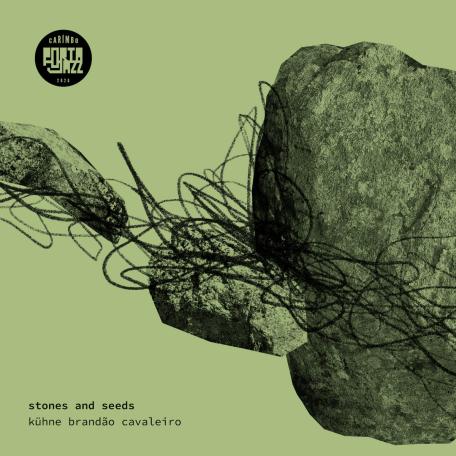
The Berlin-based singer Almut Kühne joined forces with two Portuguese musicians to form an intriguing trio: alongside saxophonist João Pedro Brandão and drummer Marcos Cavaleiro, this project has now released its debut recording through Carimbo Porta-Jazz. We begin by hearing the trio in improvised dialogue, where ideas gradually come together and coalesce. Kühne lends her chameleon-like voice, shifting fluidly between different registers. Brandão’s contributions are assertive and, here, in addition to his usual saxophone, he also employs the flute, clarinet, and organ. On percussion, Cavaleiro is responsive, attentive, and highly interactive. In a felicitous meeting, the three musicians contribute to a constantly evolving music — a shifting sonic mass that grows and transforms with each gesture and intervention.
“Transitory” comprises eight pieces in the extraordinary, consciously chosen sound configuration of bass clarinet, electric guitar and drums, eight pieces of a broader range of spheres and drama in a coherent, captivating dramaturgy: whirling bounciness, counting rhyme recitation, hovering through dream- like melancholies, dark incantations over lurking unease, violent runs and riffs, balancing find and search movements, vanishing uncertainty, hammer blow eruptions … just a few indications of the (e)motional faces, gait and dynamics of the music. Music can transport listeners away from the harsh realities of everyday life or allow them to delve deeper into the vibrations of their souls in their lives. ”Transitory" moves and navigates captivatingly between these two poles with its unique timbres and rhythmic shifts. It is done, shaped, connected, integrated and fine-tuned by Shabnam Parvaresh, clarinets, Ula Martyn-Ellis , electric guitar, and Philipp Buck, drums, in attractive way. The group’s name is the pronouncing sound of the Farsi letter Shin (ش), standing for the begin letter /Sh/ of Shabnam, the leader and dedicated player of the kolarint bas/ کلارینت باس.

This quartet features Paul Dunmall on tenor and soprano saxophones, French pianist Sophia Domancich, bass player James Owston and drummer Miles Levin. Two of the tracks are based on compositions, Dunmall's own Afghan Women and Coltrane's Spiritual, while the other three tracks are freely improvised. Very much in the style of the classic Coltrane Quartet, this album captures the spirituality of that quartet and also reflects movingly on Dunmall's concern for the plight of women in Afghanistan.

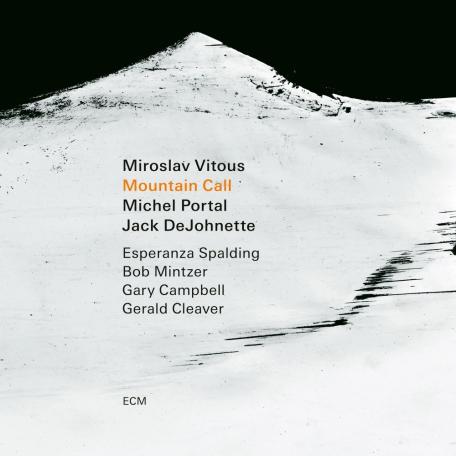
Mountain Call is Vitous first ECM album as a bandleader in a decade. The material presented was recorded in several sessions over a period of seven years and can best be described as a reflective summary of the many musical paths the bassist has explored during his career.Vitous is heard here in a wide range of varied ensemble configurations among them, Esperanza Spalding, Jack DeJohnette, Michel Portal, Bob Mintzer and Gerald Cleaver.
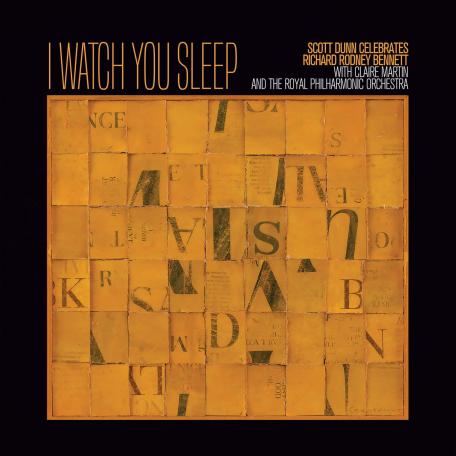
Superb diction by vocalist Claire Martin among a rather large outfit with a small symphonic orchestra of 58 musicians. Scott Dunn's arrangements can be voluminous or sleek, but never opulent or disgusting. Many originally lively pieces have been transformed into ballads with connotations to Claude Debussy and Bill Evans. I Watch You Sleep was published at the tenth anniversary of Richard Rodney Bennett's death (1936 – 2012). The English composer and pianist was musically versatile (jazz, romanticism and avant-garde). His output included several hundred concert works and music for film and television. He was also active as a pianist, and occasionally vocalist. Bennett had worked with a string of singers and Claire Martin was the last of his duo partners for 12 years. Duke Ellington was one of Bennett's favorite composers, and he made several recordings of major Duke numbers. Scott Dunn has been inspired by Bennett's recordings of the Ellington songs, and from this has emerged romantic, lush, majestic and soaring orchestrations. Martin sings sensually with the orchestra flowing behind her. The jazz quartet is fully integrated with the orchestra. But in the middle of the album there are tracks with only Martin and the rhythm section plus flugelhorn. This jazz quartet is smooth and polished, and the drums are held back, often only with the use of brushes. Claire Martin (voc), Ryan Quigley (flh), Rob Barron (p), Jeremy Brown (b), Matt Skelton (d), Royal Philharmonic Orchestra, Scott Dunn (cond, p). London, 24 & 25 August 2022.
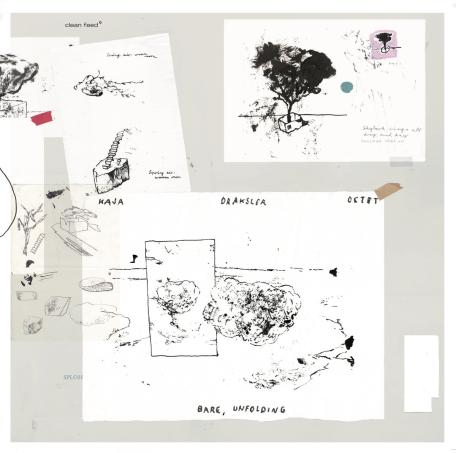
Kaja Draksler’s "Bare, Unfolding" is an innovative work that draws inspiration from the minimalist poetry of Basho’s haiku. Stripped of all artifice, the composition achieves a meditative essence by skillfully blending classical Japanese and Western traditions with jazz improvisation. Through the use of atypical timbres (notably the shō and the shakuhachi) and incantatory vocal techniques, the music immerses you in a dreamlike, minimalist atmosphere. This new project highlights Kaja Draksler’s ingenuity, as she weaves disparate influences into an intimate and daring creation that redefines the boundaries of the genre.
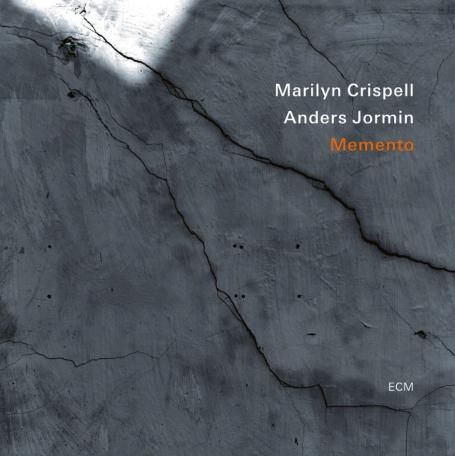
The Rêve d’Eléphant Orchestra is a delightful mini big band: its sense of dynamics and rich textures are extraordinary, whilst its playful choices – which are perhaps far from conventional – are as surprising as they are delightful. (Pierre Dulieu)

Bas Bulteel's “Improvised Textures” is a must-have album for piano enthusiasts. It is high time that Bas Bulteel earned his recognition and is invited to perform on stages everywhere. (Bernard Lefèvre)